Today's highlights
- Personal curation becomes the weekend coding-agent demo: karpathy uses Claude to compress decades of HN comments into HackerTube; the same day Elon hard-sells Grok Bot and poteto ships a Day 28 game with Bot + Cursor.
- Harness layers keep open-sourcing and competing: DeepSeek Harness's dsh-superagent prototype spreads on X, while Google Antigravity shows DeepMind navigating proteins and drafting wet-lab plans.
- Cost and packaging become new friction: Microsoft/Berkeley TokenEconomizer discussion reheats, third-party harnesses draw Claude subscription "multiplier" complaints, and Coincide tries to put many agents in one native Mac window.
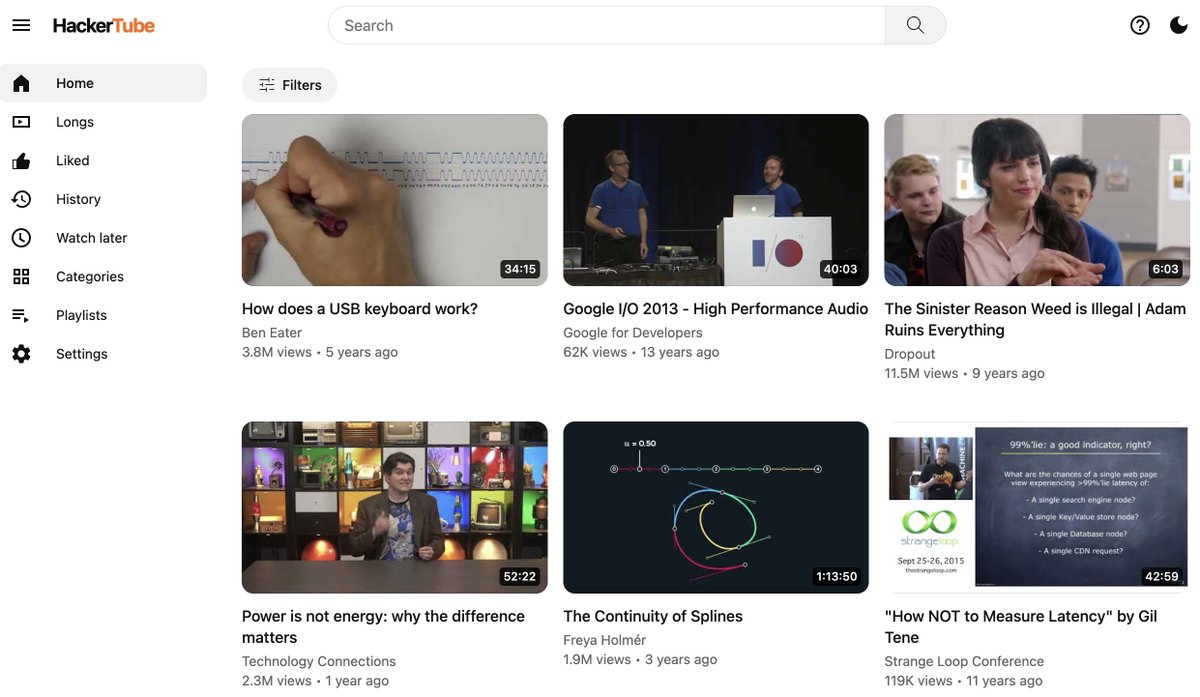
1. karpathy: HackerTube — rewriting YouTube recommendations with Claude in ~2 hours
Key points: @karpathy posts a weekend hack, HackerTube (hackertube.org): tired of YouTube's recommendations, he had Claude (about two hours, citing Opus 5.5) filter roughly 43M comments across ~20 years of HN down to 6,454 videos that keep getting recommended — a "significantly better" viewing experience. Follow-ups frame it as Claude helping fight short-form / recommender attractor basins.
Why it matters: This is not another chat toy — it treats the agent as a personal curation pipeline from public corpora to a shareable product UI, and it still hinges on a top model plus a sharp intent.
- karpathy: HackerTube: https://x.com/karpathy/status/2116957135661945283
- _sholtodouglas: follow-up: https://x.com/_sholtodouglas/status/2116963764612563415
2. Grok Bot: Elon pushes trials; poteto Day 28 ships with Bot + Cursor
Key points: @elonmusk posts repeatedly to try Grok @Bot, saying the team lands dozens of fixes and features most days, and amplifies a demo of Bot researching gifts and spending from an X Money budget. Same day, @poteto's Day 28 lands tibo.dog: a $5.99 domain and a small game built with Grok Bot + Cursor, playable inside X, with very high engagement.
Why it matters: Platform-owner acquisition meets calendar shipping — Grok Bot's story expands from "coworker with its own computer" to "pipeline that can deliver a playable artifact."
- elonmusk: Try Grok Bot: https://x.com/elonmusk/status/2117033967782113327
- elonmusk: gift demo: https://x.com/elonmusk/status/2116989604104392969
- poteto: Day 28 / tibo.dog: https://x.com/poteto/status/2117004709198475365
3. DeepSeek Harness: dsh-superagent prototype and long-running harness essay
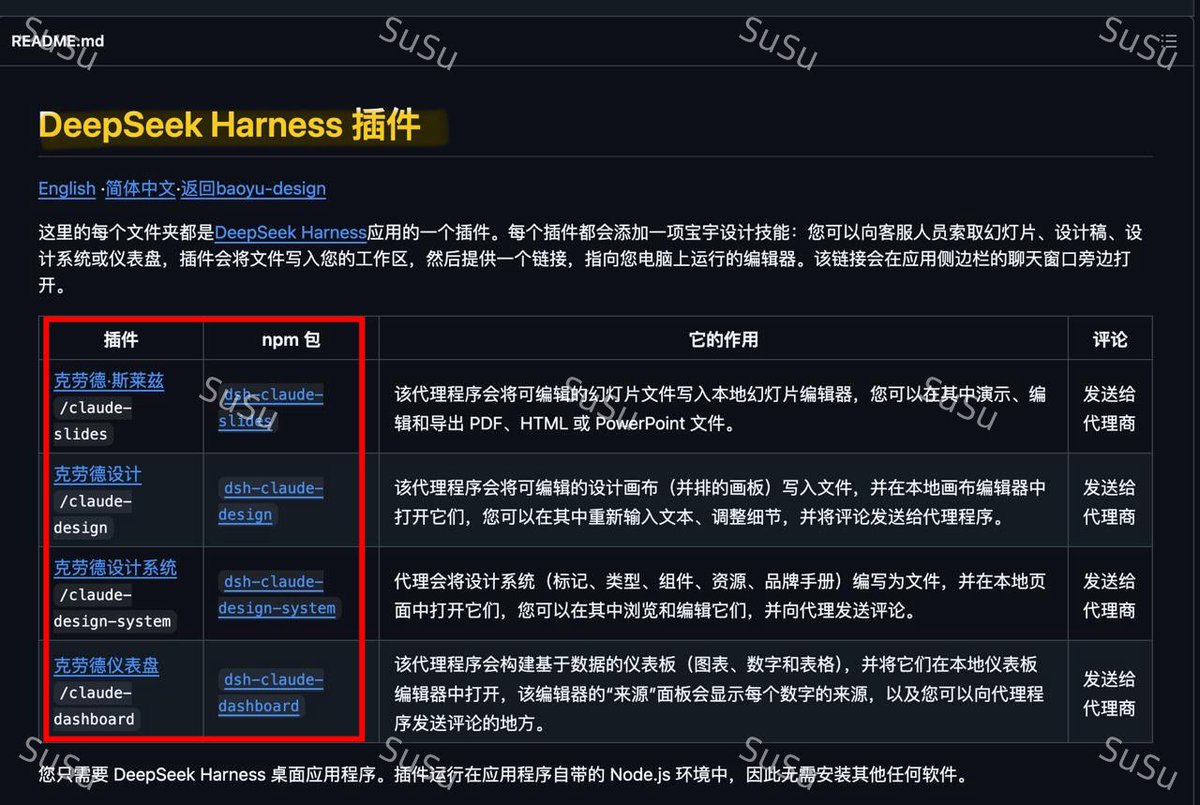
Key points: @DeepSeekHarness publishes an X Article (order-of-magnitude ~8k likes and ~8k bookmarks). Community discussion centers on deepseek-ai/dsh-superagent-prototype (MIT; GitHub created_at ~2026-10-31): a research prototype proactive coding agent for one GitHub repo, with router + workers, listening to GitHub (optionally Feishu) to open work items / PRs. @badlogicgames quotes the piece, calling DSH one of the few innovative harness teams and aligning with earendil's "single, long-running session" direction. Separate posts about design plugins bolted onto DSH/Claude are community remixes — keep them distinct from the official prototype.
Why it matters: Open-source teams are pitching a more proactive repo coworker, while veteran harness authors converge on long sessions + specialized subagents — that architecture fight matters more than a one-day star chart.
- DeepSeekHarness: article: https://x.com/DeepSeekHarness/status/2116857257245987236
- badlogicgames: recommended reading: https://x.com/badlogicgames/status/2116997870213906524
4. Google Antigravity: DeepMind navigates millions of proteins and drafts wet-lab plans
Key points: @antigravity shows @GoogleDeepMind researchers using Antigravity to navigate millions of uncharacterized proteins, validate a novel antimicrobial peptide, and generate a wet-lab experimental plan in minutes — with Antigravity UI sidecars to inspect structures beside the agent.
Why it matters: Coding-agent demos are leaving pure software repos — when "navigate millions of entities + emit executable experiment steps" is the official video, scientific workflows become the next evaluation arena.
- antigravity: DeepMind protein demo: https://x.com/antigravity/status/2116952756342677919
5. OpenCode: Hex onboarding stuck behind a flag; GitHub triage grows subagents from long sessions
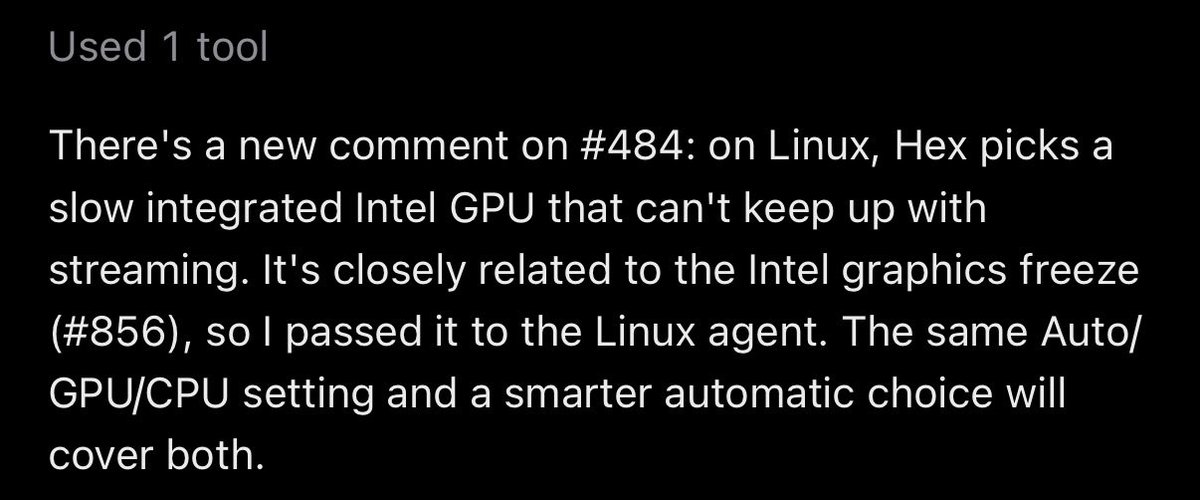
Key points: @thdxr admits the new Hex onboarding was left behind a feature flag so everyone still saw the old flow — fix coming next release. Same day he shows the team's GitHub triage running on a long-lived OpenCode session that delegates to subagents which previously touched similar work, so specialists (e.g. a "linux fuckery" subagent) emerge naturally. Another post asks for log-style APIs on GitHub/Slack — "everything since last poll," even metadata — so agents can poll cheaply.
Why it matters: The Hex flag miss is a product oops; the more copyable idea is "long session + delegatable historical workers," which rhymes with DSH / pi harness talk.
- thdxr: Hex onboarding flag: https://x.com/thdxr/status/2116977984531837183
- thdxr: GitHub triage long session: https://x.com/thdxr/status/2116979661188321541
- thdxr: log-style APIs: https://x.com/thdxr/status/2116963930446729498
6. TokenEconomizer: Microsoft + Berkeley black-box cost control gets another X wave
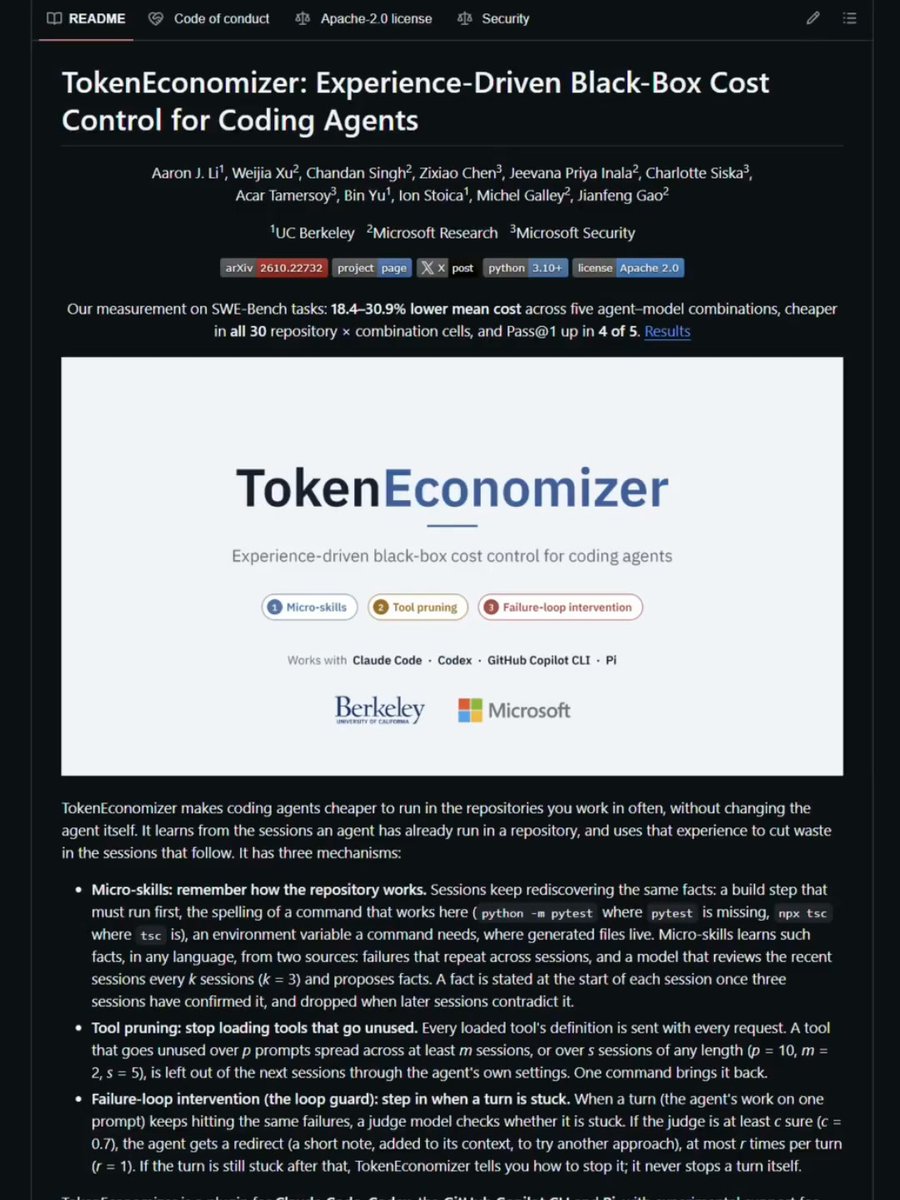
Key points: Posts from @marfinxx, @undefinedKi and others amplify TokenEconomizer (Microsoft Research + UC Berkeley et al.): without changing agent weights, micro-skills, tool pruning, and failure-loop intervention cut coding-agent tokens — paper claims ~18.4%–30.9% lower mean SWE-Bench cost across combinations. GitHub microsoft/TokenEconomizer first released around 2026-10-26 (repo older) — not a same-day open-source; the past day is secondary spread of install tips and paper numbers. Official support lists Claude Code / Codex / Copilot CLI / Pi, with experimental Cursor / OpenCode hooks.
Why it matters: Once "token bill ≈ payroll" is water-cooler talk, black-box cost controllers sit next to model choice as infrastructure.
- marfinxx: paper take: https://x.com/marfinxx/status/2116866698091331877
- undefinedKi: plugin pitch: https://x.com/undefinedKi/status/2116940191952691262
7. Coincide v0.1.0: a native Mac window for multiple agent harnesses
Key points: @apoorvdarshan ships Coincide v0.1.0, a free open-source native Swift/AppKit Mac app that runs Claude Code, Codex, Cursor, Grok Build, OpenCode, Antigravity side by side and lets you switch agents mid-thread — described as a native port of T3 Code. Repo apoorvdarshan/coincide was created 2026-10-27; today is the v0.1.0 public ship.
Why it matters: The control-plane fight moves from web remotes to native multi-harness shells — whoever makes switching free becomes the default IDE chrome.
- apoorvdarshan: Coincide v0.1.0: https://x.com/apoorvdarshan/status/2116927672274305244
8. Claude Agent SDK "overcharge" reports on third-party harnesses
Key points: @thegenioo warns that when Claude models are used outside Claude Code via the Agent SDK (examples: T3 Code, Synara, Monocode, OpenCode), some users see ~1.6×–2.3× burn on 5-hour limits (weekly limits also mentioned), says the issue is still open, and advises against that path for now. The post quotes OpenCode's "use your Claude subscription" context; exact multipliers and which paths are affected still need the official issue / billing page.
Why it matters: Subscription interoperability is how ecosystems grow — and where billing edges get messy. The more harnesses flourish, the more "same sub, different multiplier" threads will trend.
- thegenioo: overcharge warning: https://x.com/thegenioo/status/2116821966586044633
9. mitsuhiko: Opus Induced AI Psychosis, and laundering readline via synthetic tests
Key points: @mitsuhiko hosts a Spaces titled Opus Induced AI Psychosis, and separately shows readline reimplemented against synthetic tests the agent first wrote against the original — joking it is a GPL→MIT laundromat (repo mitsuhiko/lineread). The through-line: stronger models make it easier to wash a whole toolchain into "looks tested" with false confidence.
Why it matters: One of the sharpest practitioner warnings on vibe coding — the failure mode is not only hallucinated code, but hallucinated tests that stamp that code as green.
- mitsuhiko: Opus Induced AI Psychosis: https://x.com/mitsuhiko/status/2116998255829504492
- mitsuhiko: lineread / synthetic tests: https://x.com/mitsuhiko/status/2117029133418983576
10. Grok Bot as manager, Claude Code / Cursor as workers: orchestration as the new UI
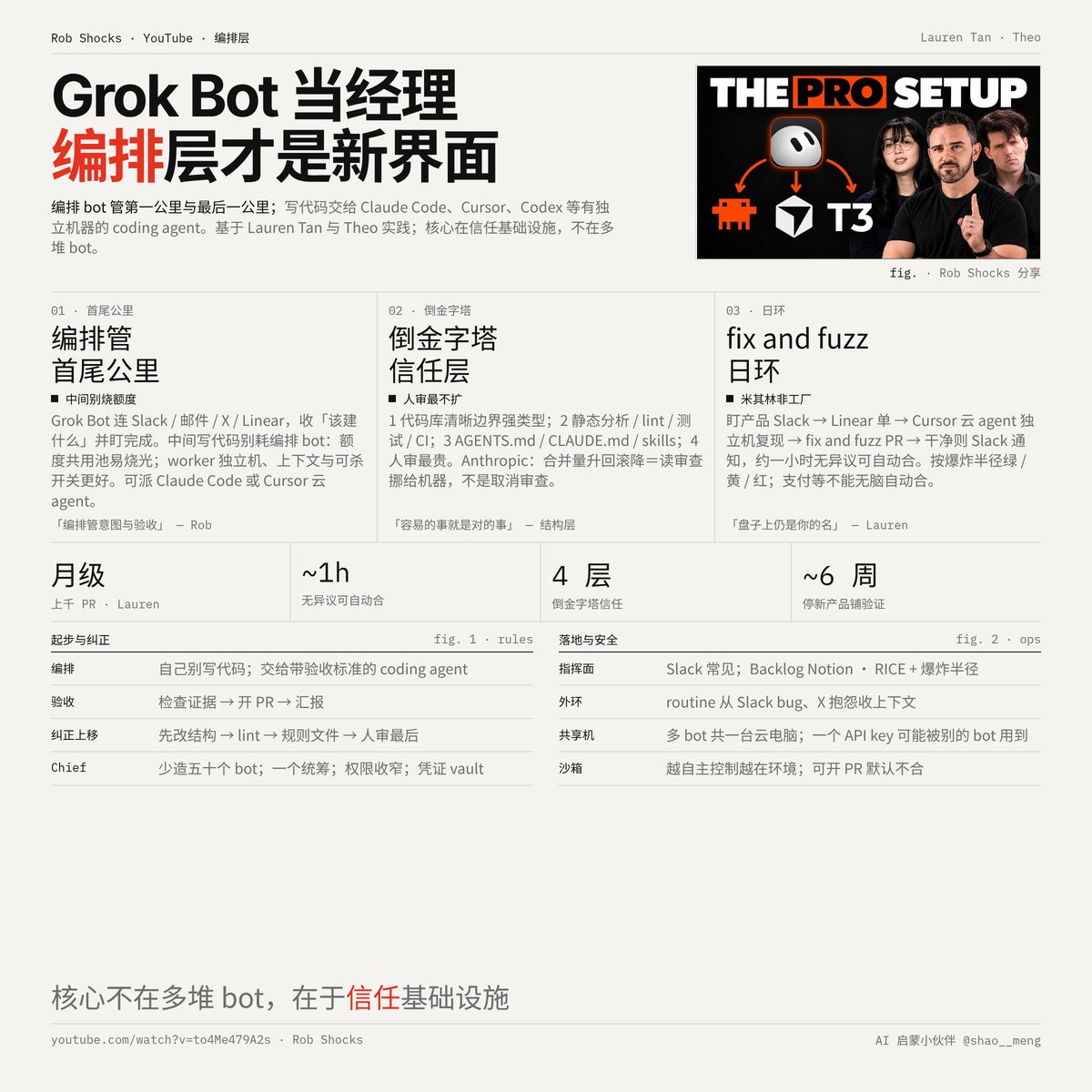
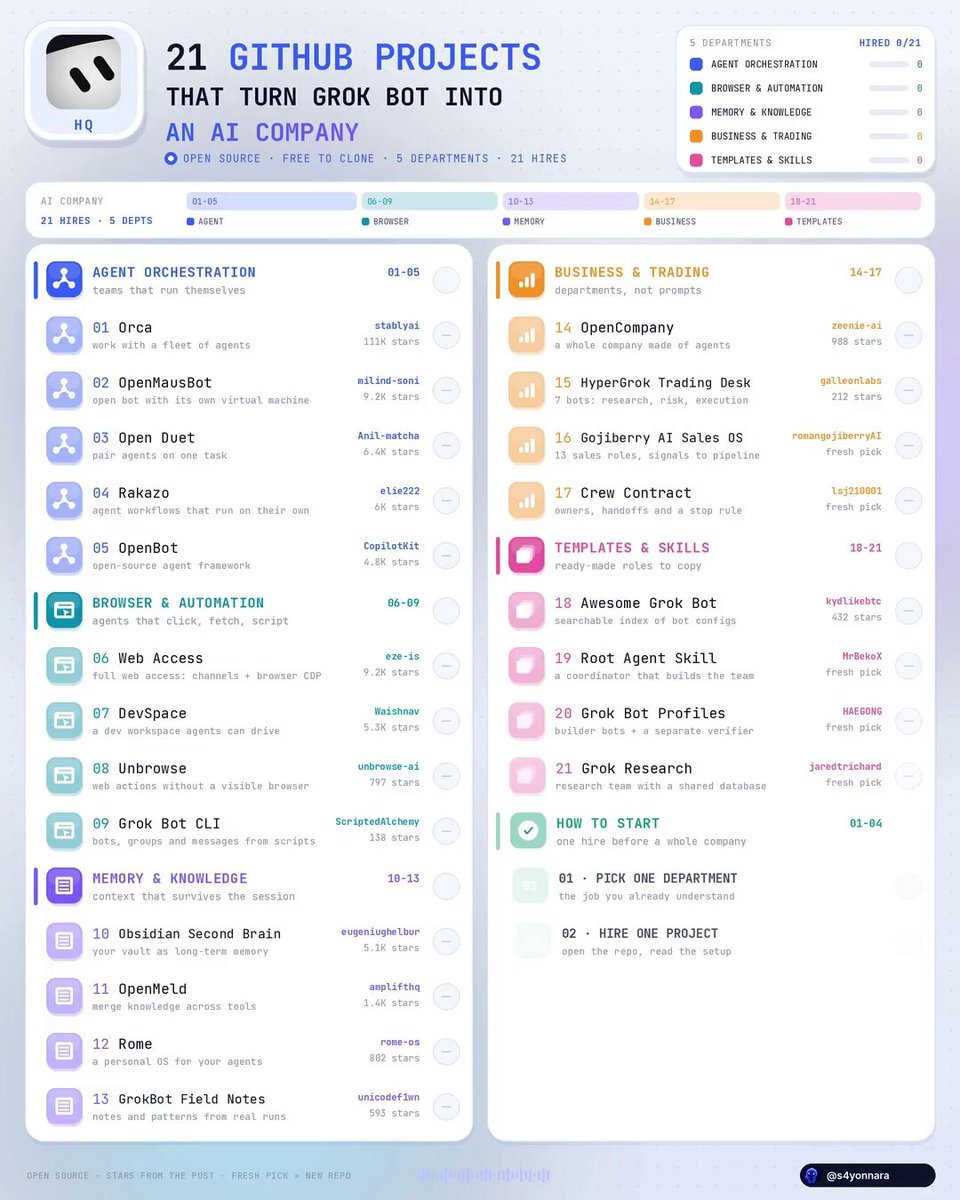
Key points: @shao__meng relays @robshocks' video reading of @poteto and @theo practices: an orchestration bot owns the first mile (intent) and last mile (chase progress / accept work), while Claude Code / Cursor / Codex — agents with their own machines — do the actual coding. Same-day listicles round up GitHub projects that turn Grok Bot into a "whole AI company" (orchestration, memory, browser automation, etc.); treat those as indexes, not endorsements.
Why it matters: After single agents, the contest is who orchestrates whom — Grok Bot's always-on cloud computer is being seated in the manager chair, not only the typing chair.
- shao_meng: orchestration take: https://x.com/shao_meng/status/2116888552411746697
- s4yonnara: 21 GitHub projects list: https://x.com/s4yonnara/status/2116992286764790064