Today's highlights
- Subscriptions reshuffle again: Claude renames Max 5x / 20x to Max / Ultra and drops the 5-hour window for verified Ultra; OpenCode restores Claude subscriptions the same day and stacks Cheepseek's hundred-dollar DeepSeek plus an image-gen tool.
- Security and infrastructure: A malicious Claude Code extension on Cursor's marketplace hit at most ~5,000 users — Anthropic staff say Anthropic systems were not breached; Messages API gets a Claude-authored Rust rewrite with ~40–50% lower CPU.
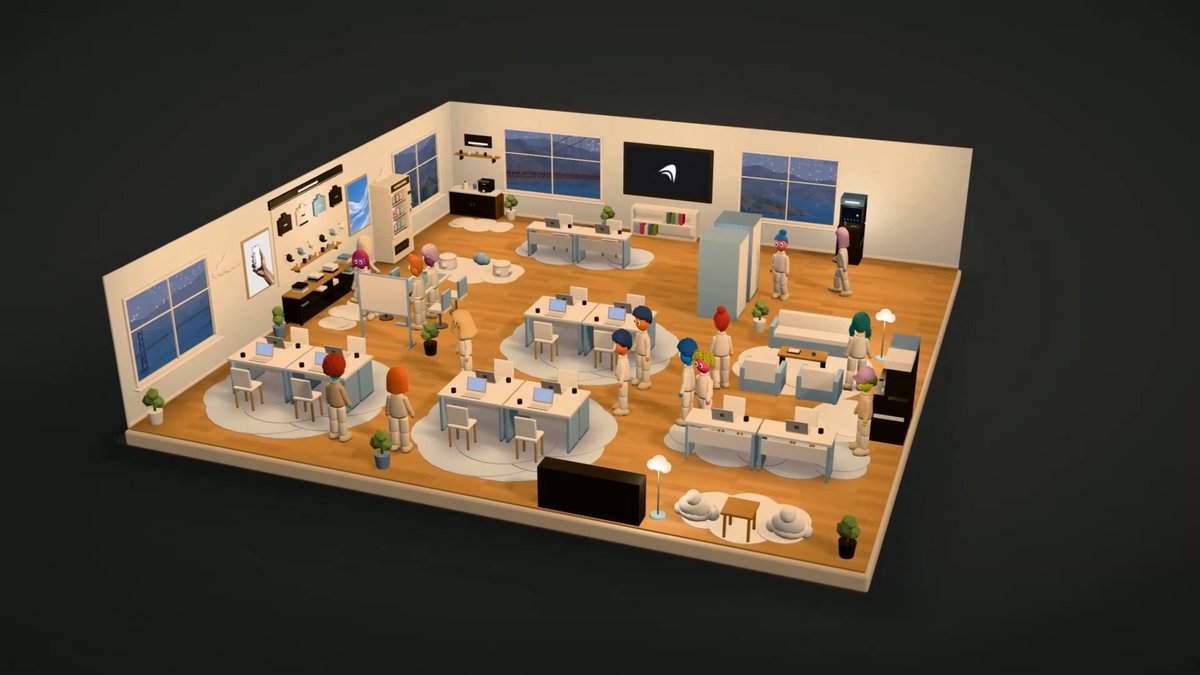
- Space compute and desktop agents: Sundar shows an orbital TPU's first haiku; Gemini Mac can jump into Antigravity; Grok Bot can see your phone screen; Rex floating panes and Skydive's 3D office visualize the agent workplace.
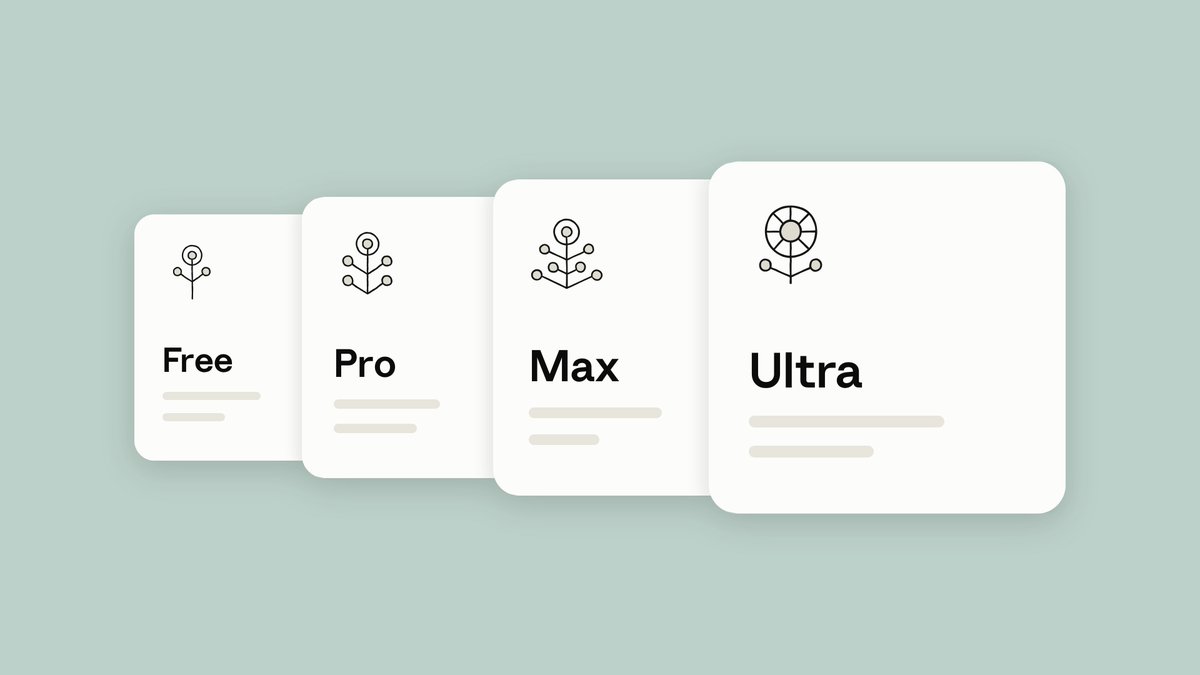
1. Claude: Max becomes Ultra; verified accounts lose the 5-hour limit
Takeaways: @claudeai renames plans: Max 5x → Max (still $100/mo), Max 20x → Ultra (still $200/mo), with existing subs auto-migrated. The bigger change: verified Ultra accounts lose the 5-hour window, starting today for most existing subscribers; newer accounts keep a temporary limit until verified to curb fraud. Weekly limits are unchanged. @dotey posts a long CN read (including how to self-check verification). @thsottiaux replies: "Better announce 28 days of reset."
Why it matters: This answers the pain of heavy Claude Code users stuck on a rolling 5-hour window while weekly quota remains — the old "20x" label loses window semantics, and the story shifts from multiplier branding to verifiable sustained throughput.
- claudeai: rename + limits: https://x.com/claudeai/status/2116220869479428500
- dotey: CN deep dive: https://x.com/dotey/status/2116233564823974005
- thsottiaux: jab reply: https://x.com/thsottiaux/status/2116256600436641887
2. Cursor marketplace: malicious Claude Code extension, ≤~5,000 users
Takeaways: @cursor_ai discloses a security incident: a tampered Claude Code VS Code extension distributed via the Cursor IDE extension marketplace affected at most about 5,000 users; it was not built by Anthropic. Response: take the marketplace down, neutralize the malware with partners, reinstate after confirming no further risk, and ask users to update to Claude Code for VS Code 2.1.314. Anthropic's @felixrieseberg clarifies: not a compromise of Anthropic systems or employee laptops — a malicious actor used Cursor marketplace access to publish a tampered copy; official Anthropic channels are unaffected.
Why it matters: This puts the third-party marketplace trust boundary on the coding-agent stage — how model vendors and IDE marketplaces share blame will reshape install habits more than another feature drop.
- cursor_ai: security notice: https://x.com/cursor_ai/status/2116074289053175808
- felixrieseberg: Anthropic clarification: https://x.com/felixrieseberg/status/2116170451466543578
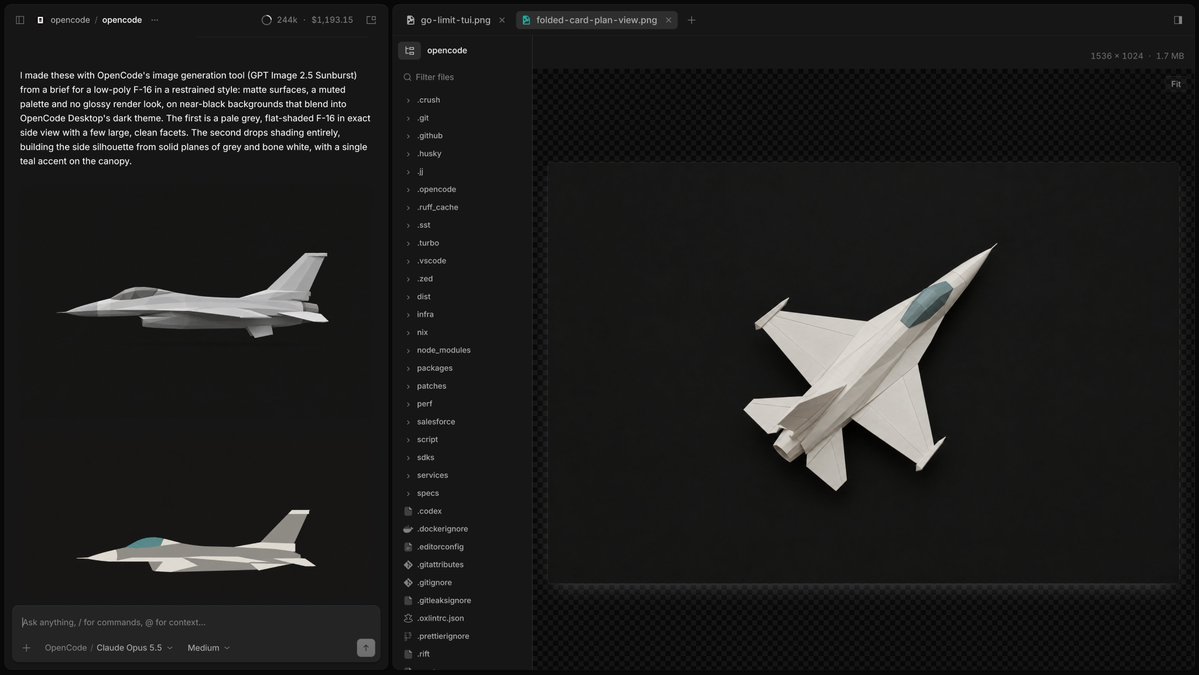
3. OpenCode triple: Claude subs back, Cheepseek $100 DeepSeek, image gen
Takeaways: @opencode ships three posts in a day: (1) Claude subscriptions work in OpenCode again (demo video; community calls it "back"); (2) Operation Cheepseek Phase 4 grants $100 of DeepSeek V4.1 Flash usage; (3) 2.2.3 adds an image-generation tool supporting OpenAI / Gemini / Grok and more for concept UI and game reference art. Combined likes clear five figures.
Why it matters: OpenCode keeps differentiating on subscription interoperability, cheap inference credits, and multimodal tools — not another CLI skin, but a single door for model procurement and agent workflow.
- opencode: Claude subs: https://x.com/opencode/status/2116198602523513081
- opencode: Cheepseek Phase 4: https://x.com/opencode/status/2116209960673800474
- opencode: image gen tool: https://x.com/opencode/status/2116203934033354866
- DanielSmolsky: subs-back demo: https://x.com/DanielSmolsky/status/2116193957675769917
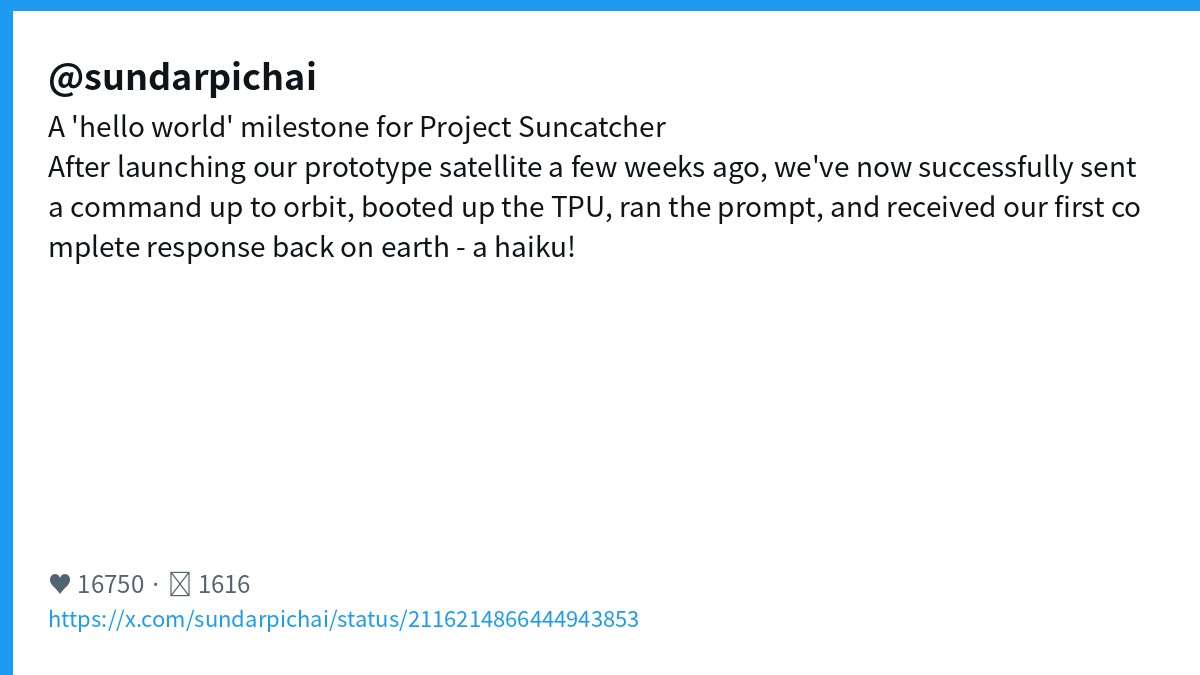
4. Project Suncatcher: orbital TPU returns its first haiku
Takeaways: @sundarpichai posts a hello world for Project Suncatcher: weeks after launching a prototype satellite, they sent a command to orbit, booted the TPU, ran a prompt, and received a complete response on Earth — a haiku. Demo video attached; likes clear 16k.
Why it matters: Moves "space compute" from concept reel to a closed loop (uplink → inference → downlink). For the AI coding crowd the point is not the poem — it is that the supply narrative for models and agents now has an orbital chapter.
- sundarpichai: hello world: https://x.com/sundarpichai/status/2116214866444943853
5. Anthropic Messages API: zero Rust engineers; Claude rewrote it; ~40–50% less CPU
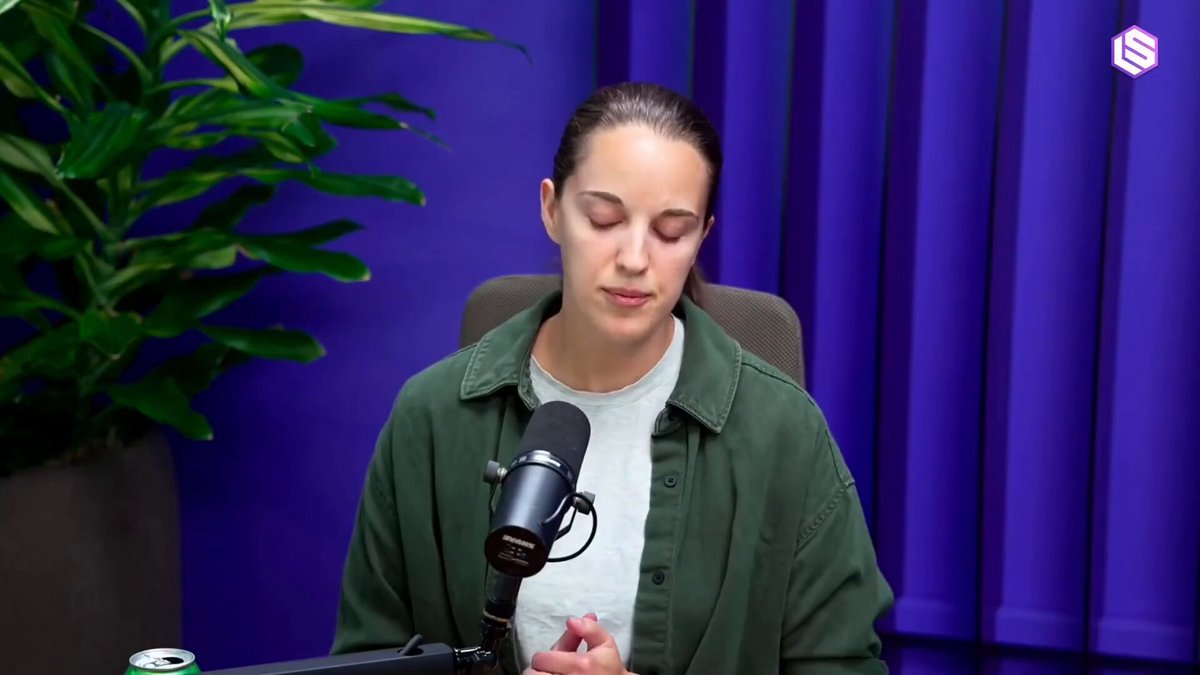
Takeaways: @somi_ai summarizes a Latent Space interview beat: Anthropic rewrote its Messages API in Rust with zero Rust developers on the team — Claude wrote the code; humans wrote the plan and checked old vs new on real traffic; CPU dropped ~40–50%. Punch line: "never do the big rewrite" may be dead advice.
Why it matters: A public case of a model writing production infrastructure — under every Claude API call — closer to rewriting ops defaults than another vibe-coding demo.
- somi_ai: summary + podcast cite: https://x.com/somi_ai/status/2116050219989373170
6. pi-durable: performance pass on a one-commit-per-step recoverable runtime
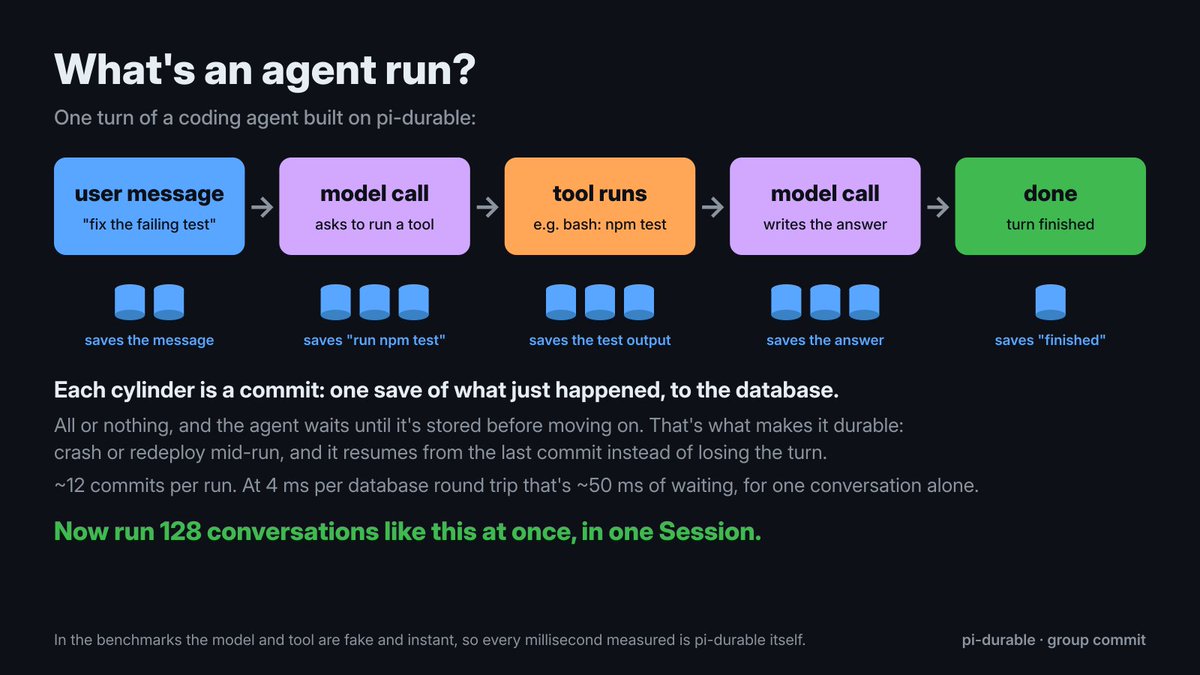
Takeaways: @badlogicgames (Mario) shares a performance round on pi-durable: every agent step is saved to a DB before the agent continues — 1 save = 1 commit — so a crash resumes from the last commit; ~12 commits per typical run. Chart compares before/after.
Why it matters: While mid-run agent crashes are still normal, making durability a default primitive matters more than stacking more tool calls for whether you dare leave an agent overnight.
- badlogicgames: pi-durable write-up: https://x.com/badlogicgames/status/2116078693827428383
7. Grok Bot: sees your phone screen; Elon frames it as a colleague
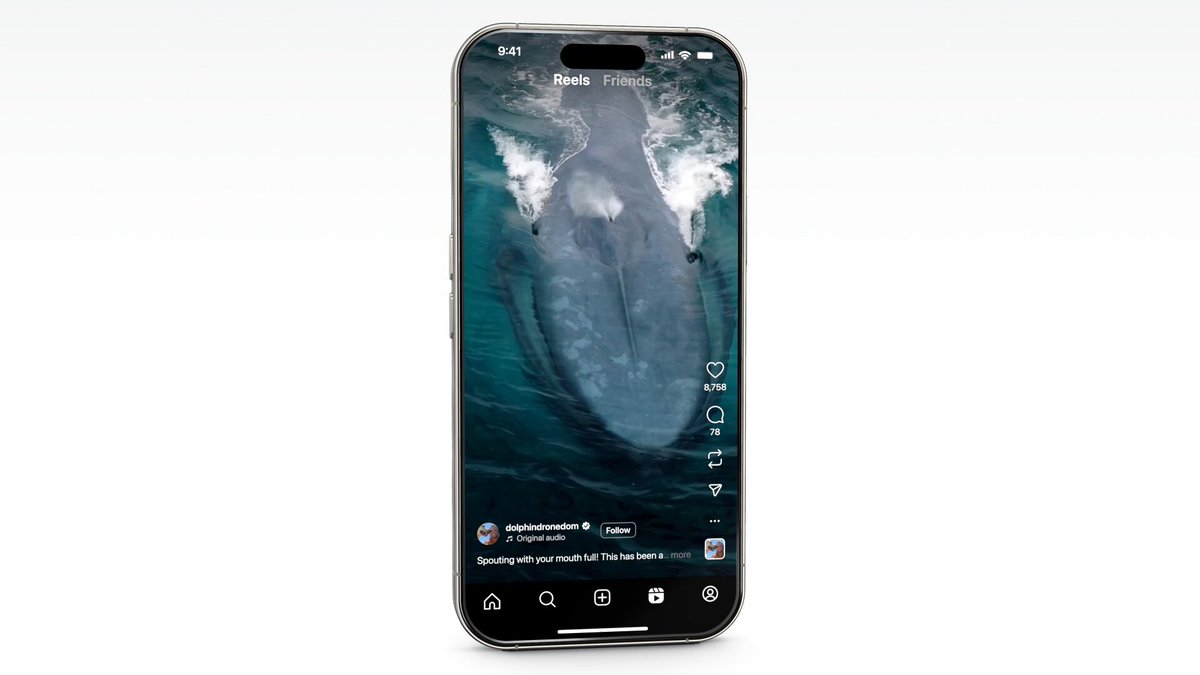
Takeaways: @everestchris6 demos holding the Action button so Grok Bot can see the phone screen — ask about the video you are watching, turn a Reel into a business prototype, break down the article you are reading — and says it ships as a free open-source iPhone Shortcut. Separately, @elonmusk frames Grok Bot as a work colleague (quoting a "less fluff, more coworker" vibe).
Why it matters: Visual context shifts from "paste a screenshot" to "hold and ask the screen" — another drop in mobile agent entry cost — while the colleague metaphor sets product personality.
- everestchris6: screen-vision demo: https://x.com/everestchris6/status/2116183923747422477
- elonmusk: Think of Grok Bot as a work colleague: https://x.com/elonmusk/status/2116305829381263528
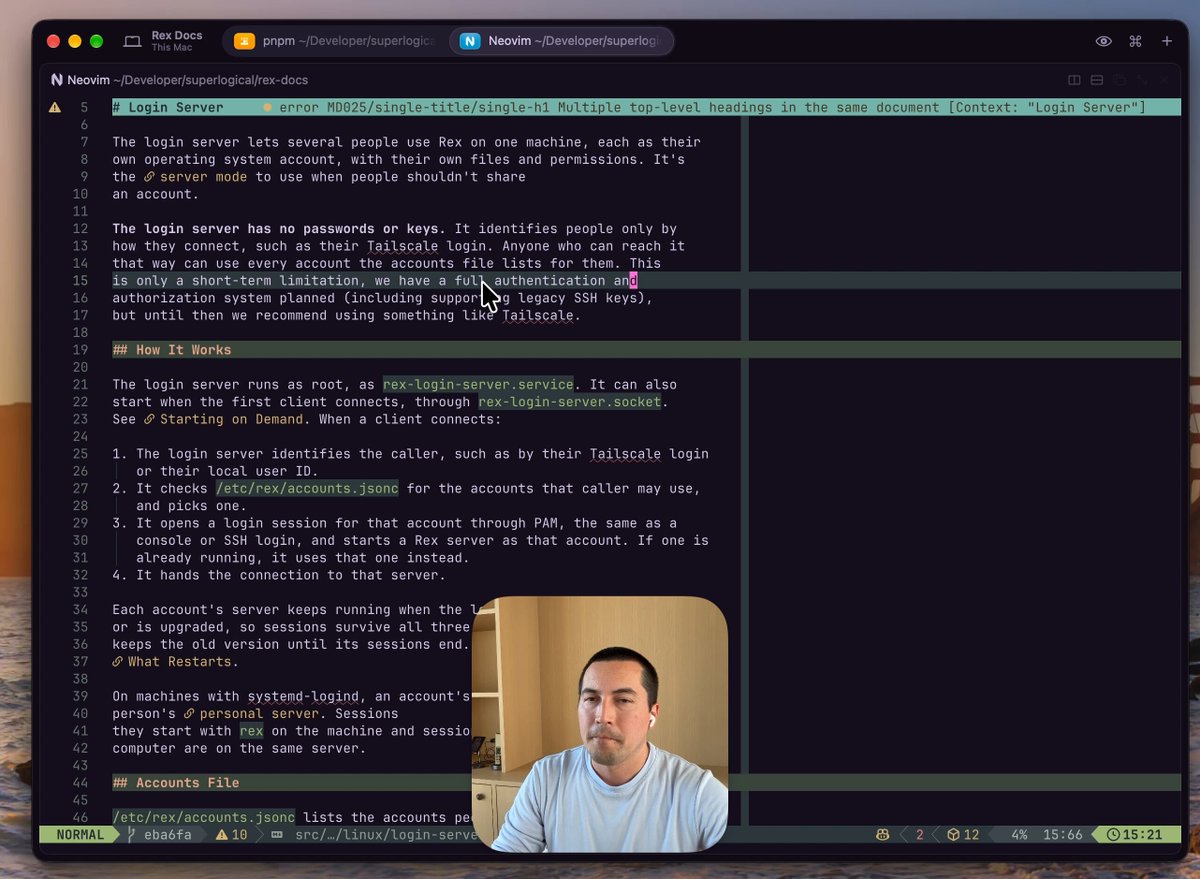
8. Rex: floating panes demo (scriptable / API-driven)
Takeaways: @mitchellh demos floating panes in Rex — how they look and fit a daily workflow — and stresses they are fully scriptable and API-driven. Long video; community places it on the Ghostty / terminal-workspace successor line.
Why it matters: The UX race for terminal and local agent workplaces keeps escalating — "beautiful and scriptable" together is what it takes to become the default host layer.
- mitchellh: floating panes demo: https://x.com/mitchellh/status/2116296333506359646
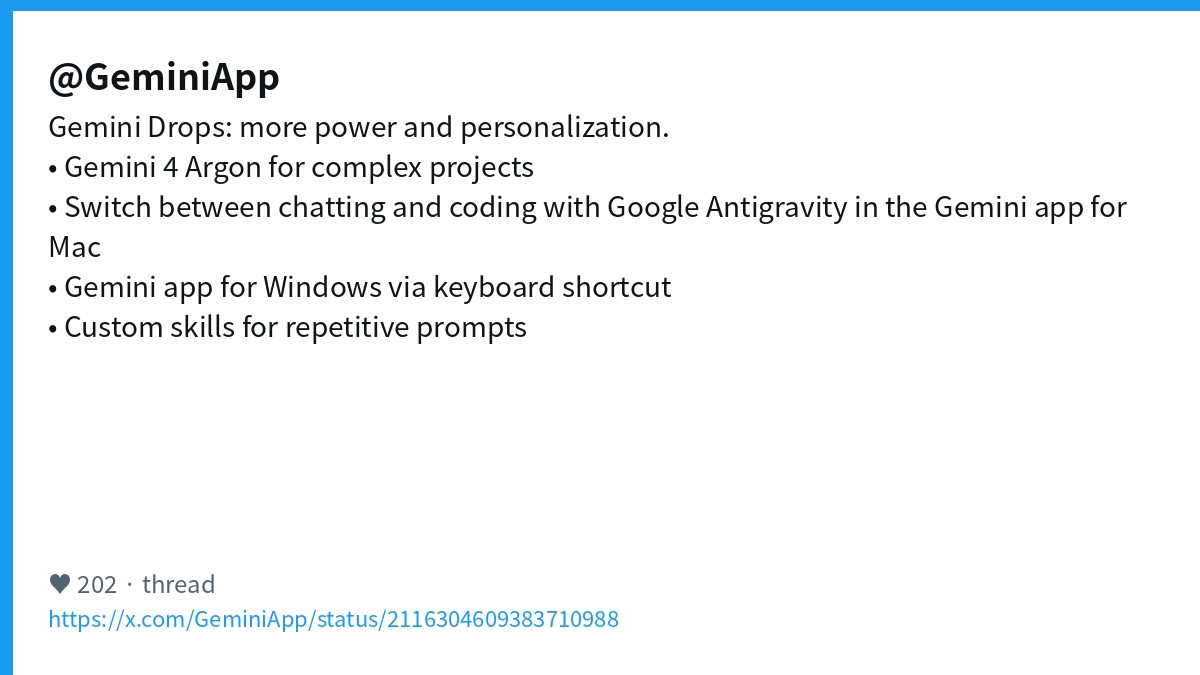
9. Gemini Drops: Argon, Skills, and Antigravity inside Gemini for Mac
Takeaways: @GeminiApp ships a Gemini Drops thread: Gemini 4 Argon for complex projects; custom Skills to reuse prompts; switch between chat and Google Antigravity coding in the Gemini Mac app (local build, debug, prototypes); Windows desktop app via shortcut. Followers call chat→agent-build without tool-switching the headline feature.
Why it matters: After Jules folded into Antigravity, Google embeds the coding agent inside the everyday Gemini client — distribution expands from a standalone IDE to the chat window people already have open.
- GeminiApp: Drops overview: https://x.com/GeminiApp/status/2116304609383710988
- GeminiApp: Mac ↔ Antigravity: https://x.com/GeminiApp/status/2116305158602936827
10. Skydive: a 3D office for AI coworkers
Takeaways: @getskydive opens to everyone: build an agent team, watch them work in a 3D office, and assign tasks over Slack / email / iMessage / the web; claim a company domain to put the office on the map; free this week. Strong video; bookmarks nearly match likes.
Why it matters: Pulls multi-agent collaboration out of lists and logs into a visitable spatial metaphor — whether the product lasts, it tests whether people want to watch agents go to work.
- getskydive: open + demo: https://x.com/getskydive/status/2116222751895855452