Today’s highlights
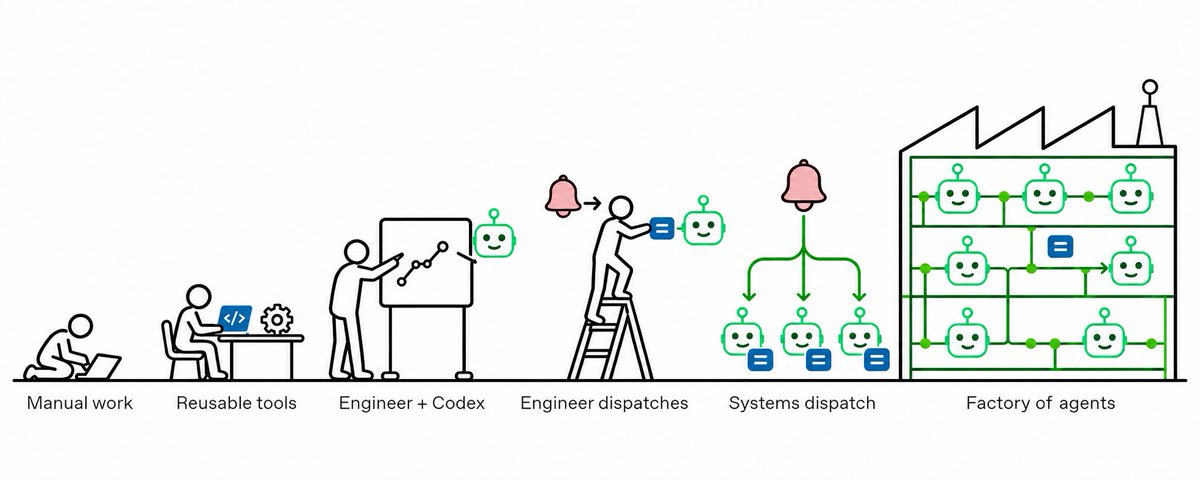
- OpenAI Performance Factory: A production alert starts a Codex investigation, a separate run challenges the diagnosis, engineers review the patch, and live metrics confirm recovery.
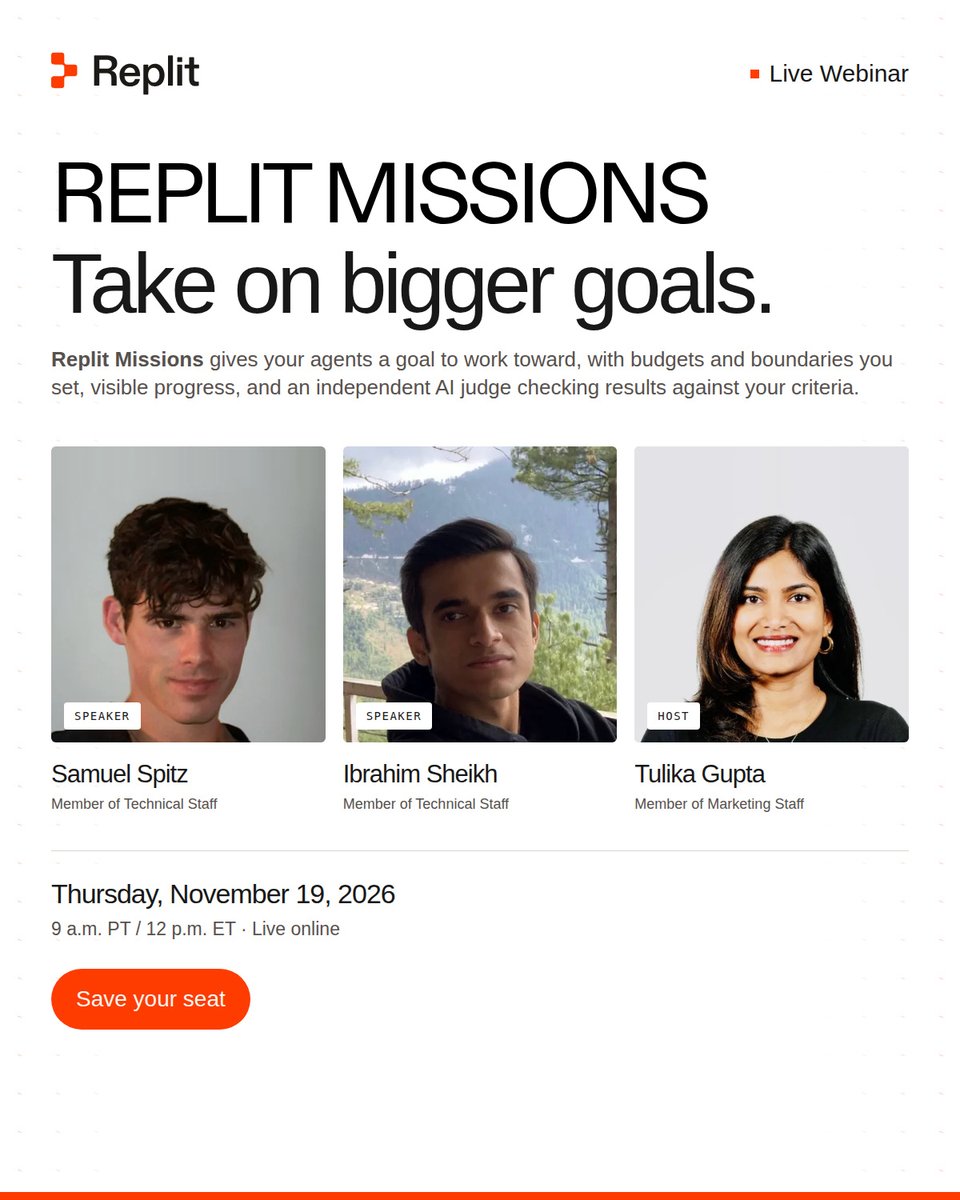
- Replit Missions: Replit showed budgeted swarms. In its NumPy experiment, 16 to 32 agents took optimized-program speedup from 17× to 19×.
- Gemini 4 Neon: Follow-ups from Cognition, Vals AI, and Artificial Analysis point to an efficiency signal, on different workloads.
1. Performance regressions: Codex investigates, engineers review the patch
What changed: OpenAI feeds production performance signals into a persistent Codex workflow. It correlates metric regressions with releases and code changes, drafts a patch when the evidence supports one, and checks production results after engineers have reviewed the change. OpenAI reports more than 1,700 investigations and more than 600 root-caused cases in just over three months. Those are not counts of fixes or automatic merges. Task state lives outside the agent session. A separate Codex run tries to disprove the proposed cause, for example by checking whether requests not exposed to the rollout slowed down too. A patch PR comes after that review. If live metrics do not recover, the task goes back to investigation.
Why it matters: The strongest design choice is that a production metric, not the agent’s own verdict, closes the loop. Separating detection, diagnosis, review, and post-deploy verification also makes it possible to measure where the automation saves work.
- OpenAI engineering write-up
- OpenAI Developers on X
- OpenAI’s workflow thread
- OpenAI’s investigation counts
2. Replit Missions coordinates agents under a budget, but doubling the team does not double the returns
What changed: Replit continued showing how Missions coordinates agents after the user supplies an outcome, constraints, and a budget. On 13 selected NumPy optimization tasks, Replit reported up to 4× speedup from one Auto (Max) agent, 17× from 16 agents, and 19× from 32. Its research follow-up emphasizes clear ownership, shared findings, and coordination overhead. These are speedups in the optimized programs, not in the agents’ work or across arbitrary repos.
Why it matters: The move from 16 to 32 agents is more informative than the raw capacity. Doubling the team added only a modest improvement in that result. Before adding workers, find tasks that can be split and verified objectively, then measure what one more worker buys.
- Replit’s Missions post
- Replit’s discussion of coordination overhead
- Official technical and case-study write-up
3. After Neon launched, three benchmarks asked different cost-performance questions
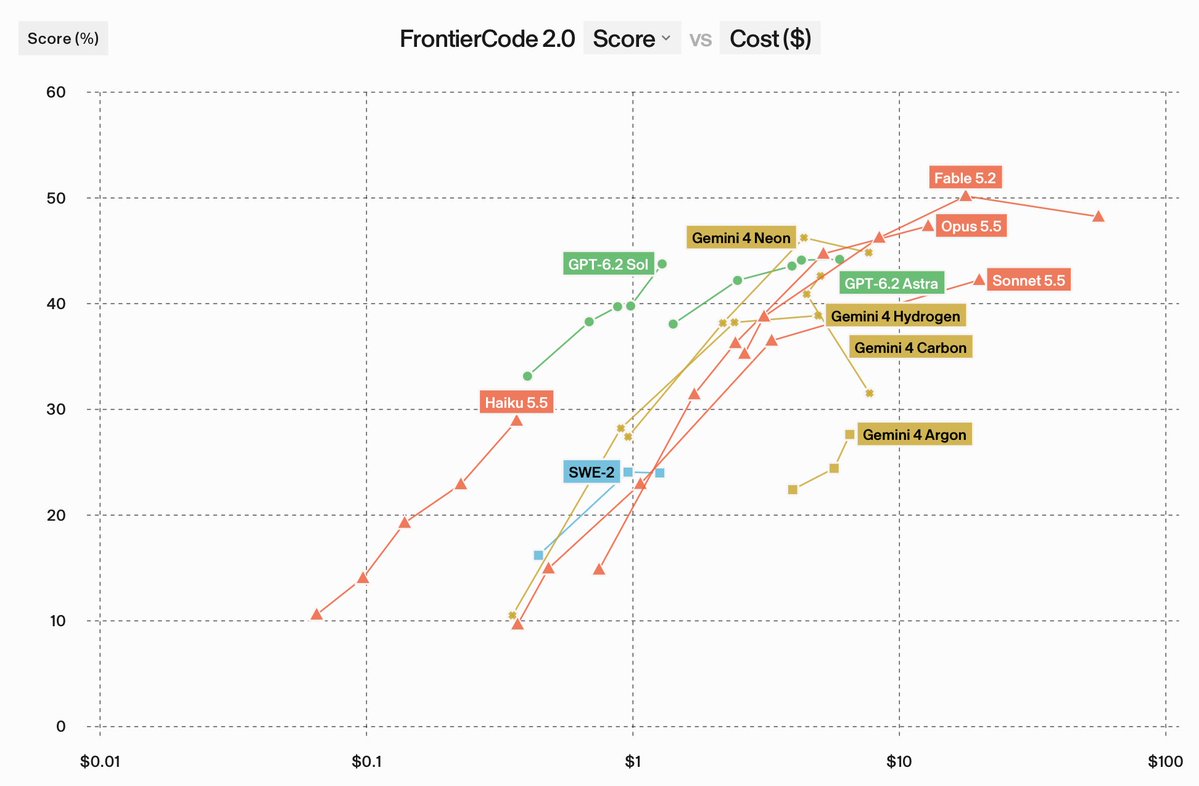
What changed: Following the launch in issue 067, Cognition reported 46.2% on FrontierCode 2.0, less than one percentage point behind Opus 5.5 at roughly one-third of the task cost. On a different test, the Vals AI RSI Index, Neon placed fourth; a full run cost about $475 versus $1,536 for Fable 5.2 and $1,647 for Opus 5.5. In Artificial Analysis’s comparison of the Gemini 4 family at the tested settings, Neon and Hydrogen occupied the frontiers for intelligence versus cost or time per task.
Why it matters: Three evaluations point to an efficiency signal, but merge-worthiness, recursive self-improvement, and broad intelligence per dollar are not interchangeable. Test Neon on your own IDE workload before treating one-third as a budget assumption.
- Cognition: FrontierCode 2.0
- Vals AI: RSI ranking
- Vals AI: full-run costs
- Artificial Analysis: Gemini family comparison
- Artificial Analysis: cost and time frontiers
- FrontierCode leaderboard
4. Codex CLI 0.171.0 defaults to the TUI workspace and adds remote noninteractive sessions
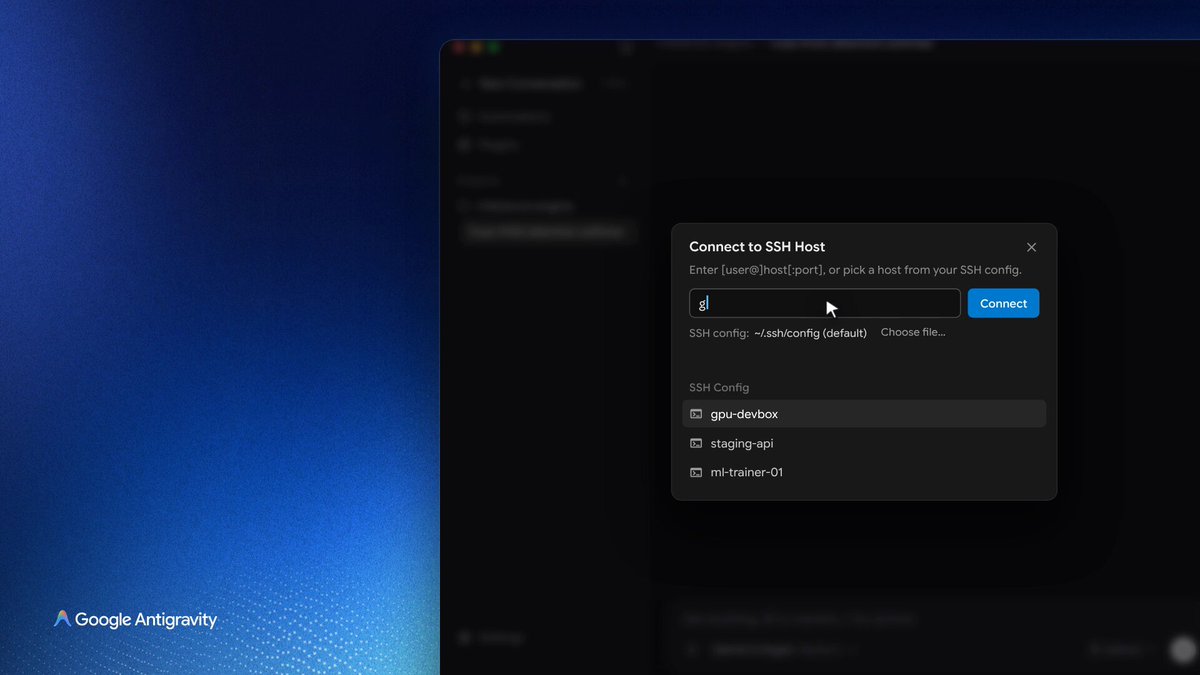
What changed: Searchable document previews, images, and subagent transcripts sit alongside the main conversation. The new codex exec --remote <ADDR> starts or resumes a noninteractive session on an existing app server. GPT‑6.2 Sol and Astra also enter the model catalog, with Sol selected by default. The remote flag connects to a running server; it does not provision one. In the same window, Antigravity announced native SSH in its desktop app. These are distinct layers: Antigravity adds a remote entry point to the desktop workflow; Codex adds an existing session server as a target for scripts.
Why it matters: The more important change is not another panel. Both the interactive client and scripts now have an entry point into a remote session service. Session recovery, approvals, and correct ownership of drafts are useful checks for any remote harness.
- Codex GitHub release
- Remote exec implementation
- Antigravity announces native SSH
- Antigravity SSH docs
- Unofficial Codex Changelog recap
5. Perplexity learns skills from old runs; GUARD asks what those updates break
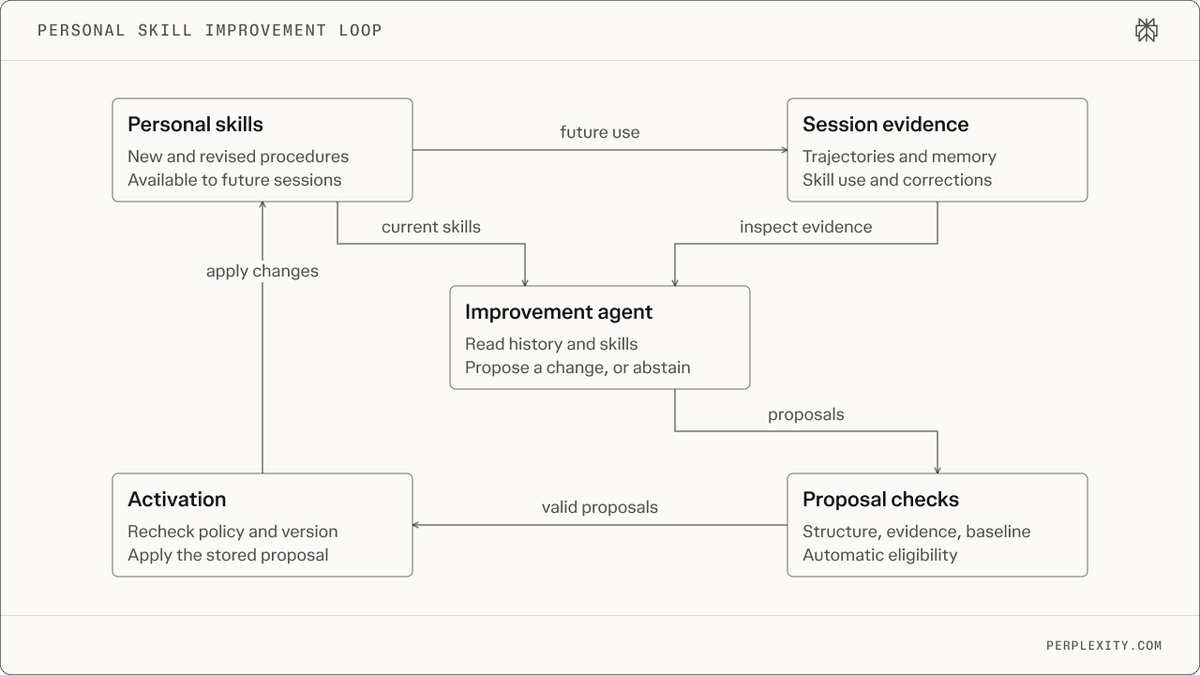
What changed: Perplexity showed Brain for Computer on X: a post-run process reads the trajectory and extracts reusable patterns into private skills, with opt-in. The vendor reports 43.8% to 62.5% success on 16 paired SkillLearnBench examples. GUARD, discussed in the same window, looks at the other side: freeze the model, allow measurable harness changes, and keep a buffer of earlier tasks to check whether an improvement breaks existing behavior.
Why it matters: Writing a trace into a skill is easier than preventing one lucky run from becoming a permanent rule. The small benchmark does not establish broad gains, and GUARD protects the cases its gate checks. An actionable design is to let agents propose edits and require a fixed regression set before accepting them.
- Perplexity’s post
- Aravind on learning from past runs
- Community discussion of GUARD
- Perplexity’s benchmark description
- GUARD paper
6. Harness Hub trains a Hermes-specific LoRA: model comparisons need to name the harness
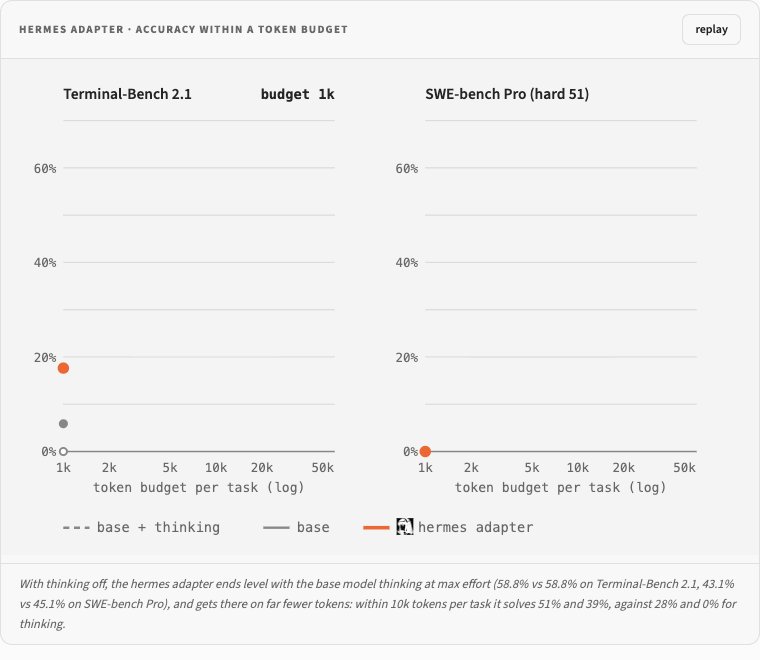
What changed: The team posted results for a Hermes-specific Qwen3.8-27B adapter. Inside the same Hermes harness with thinking off, the model card reports 29.4% to 43.1% on the 51 hard SWE-bench Pro tasks and 44.7% to 58.8% on Terminal-Bench 2.1. The base model at xhigh also reached 58.8% on the latter; the adapter generated fewer tokens on the reported comparisons. One developer tried a task of their own in Pi, while another discussed the reported OpenCode benchmark. Neither independently reproduces the Hermes results.
Why it matters: Measure whether the model–harness pairing lowers cost per successful task. Mixing harnesses or task subsets would not make a controlled ranking, and the adapter gain is not a standalone gain from Hermes.
- Nathan Habib posts Hermes results
- Team follow-up on the comparison
- Community Pi single-task example
- Community discussion of OpenCode results
- Hermes model card
7. Gemini API and LangSmith both load tools on demand, at different layers
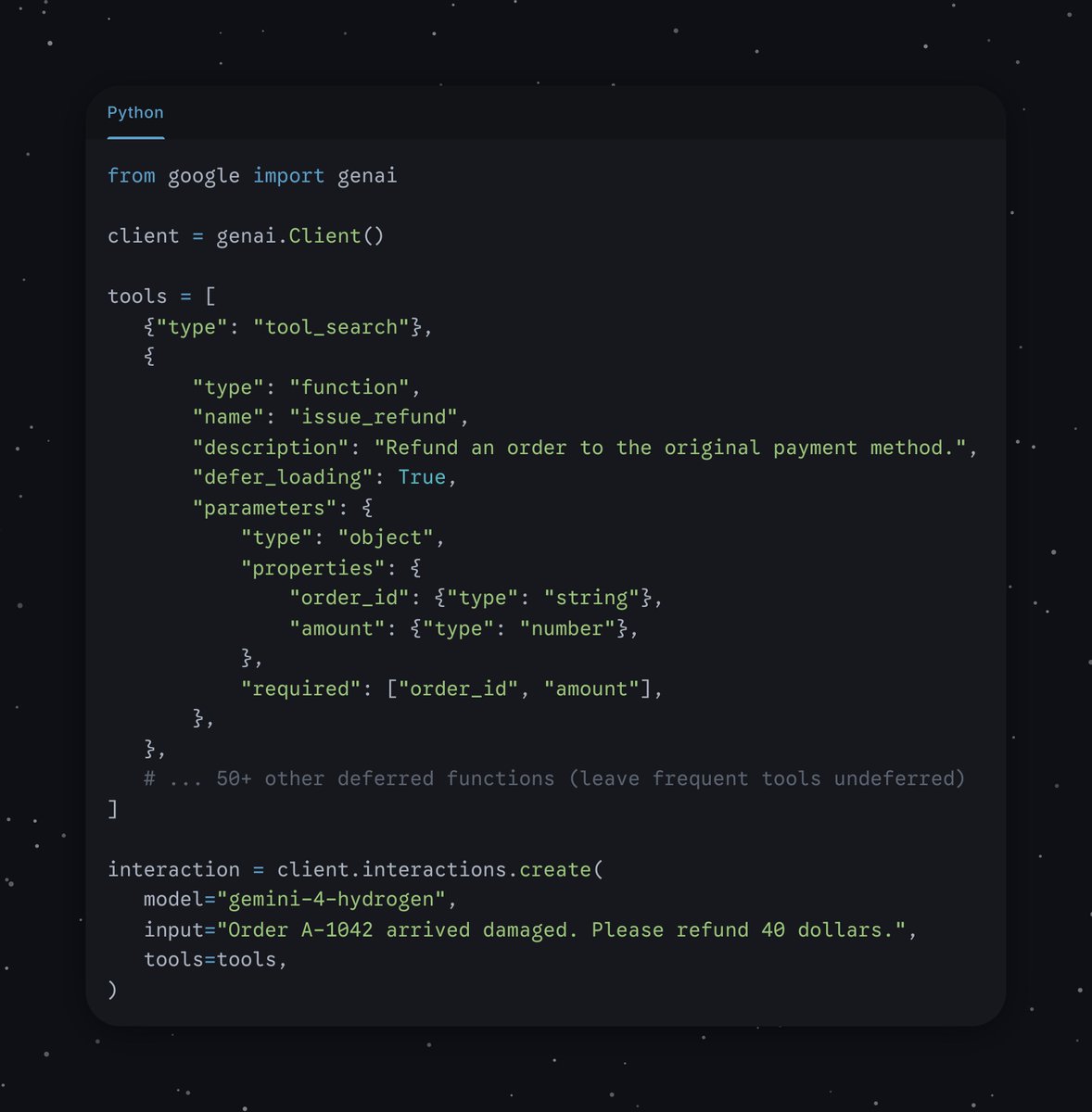
What changed: Google added Tool Retrieval to the Gemini Interactions API: the model sees names and descriptions and retrieves relevant argument schemas via tool_search rather than taking the full schema list upfront. Google says Gemini 3.6 and newer are supported. LangSmith’s public-beta Tool Gateway exposes a curated kit behind one MCP URL and offers on-demand search, with identity, tool permissions, and traces handled at the gateway. Harrison Chase’s launch post calls out whose authorization a tool uses.
Why it matters: Discovery and authorization solve different problems. One affects context and selection; the other governs what can run and under whose identity. Knowing a tool exists does not grant the right to call it. Measure the two layers separately when adopting a large catalog.
- Google Developers announcement
- Harrison Chase on tool identity
- Harrison Chase’s launch-week recap
- Google Tool Retrieval write-up
- LangSmith gateway documentation
8. GPT‑6.2 reasoning across turns: rewriting history is not the same as appending
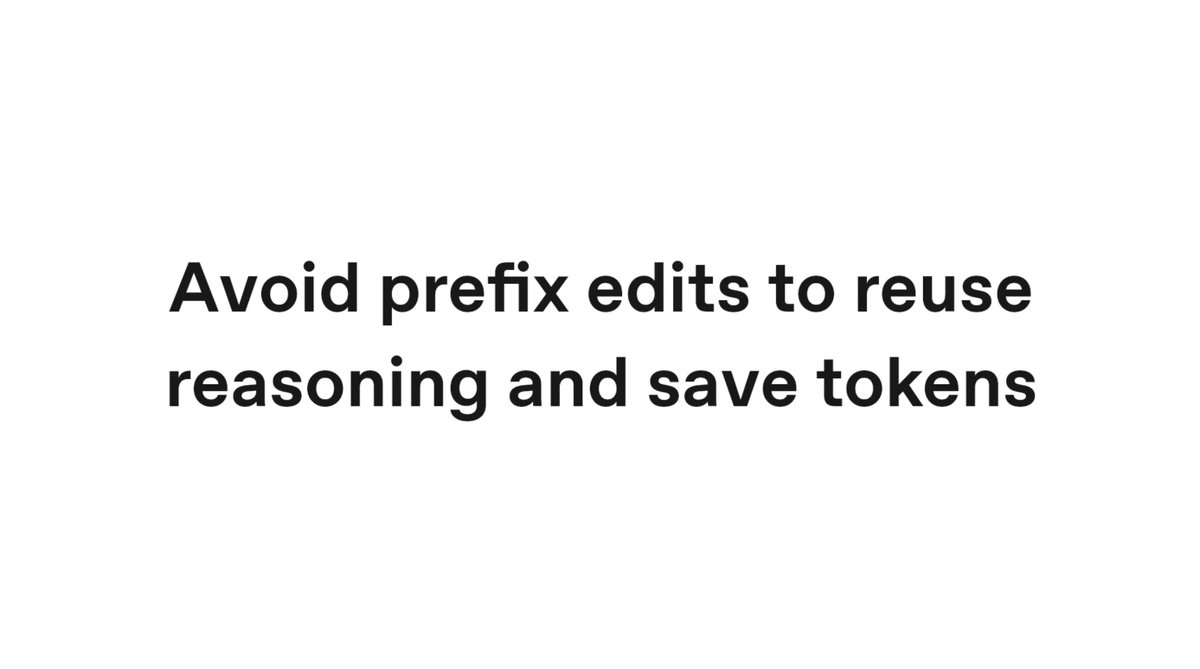
What changed: OpenAI’s Responses API guide says editing or inserting content before a retained reasoning item can cause the item to be dropped with prefix_mismatch. Appending after it does not trigger this rule, and removing whole items without editing the rest does not by itself trigger this reason. The response reports transformations in input_transformations. In a parallel discussion, Peter Steinberger said a cache fix landed in the embedded OpenClaw harness. That is a separate developer-reported cache issue, not confirmation that the OpenAI API was fixed or that one client’s hit ratio generalizes.
Why it matters: If a harness inserts instructions, compacts context, or rewrites past input, relaying a reasoning item unchanged does not guarantee the server kept it. Logging the returned transformation reasons helps distinguish lost state from model behavior.
- OpenAI API reasoning guide
- OpenAI Developers on X
- OpenAI’s diagnostic advice
- OpenAI on appending content
- Peter Steinberger on the OpenClaw fix
- Developer issue report
9. Vercel Board puts people and agents from different tools in the same task thread
What changed: Vercel Board is experimental and available on all plans. People and agents can open task threads in channels, claim work, post updates, and link PRs. Existing harnesses can connect via the CLI or JavaScript SDK; Vercel Connect syncs with Slack and GitHub in both directions, and channel access can be scoped by person or agent. Rauch frames Board in terms of multi-agent software factories. Box’s Aaron Levie points to a wider shift from answering questions to orchestrating tasks. That is a product thesis, not an independent evaluation of Board’s effectiveness. Amp Spaces offers a useful contrast. Amp’s Thorsten Ball reported split reactions: some users wanted exactly that feature, while others did not see when to use it or whether it was only for multiplayer. These are distinct products, but the reaction raises a practical adoption question: what does the collaboration surface do for a solo user?
Why it matters: Board puts task state in a thread separate from the model and executor. That is worth watching, but allowing multiple agents to join does not establish that duplicate claims, conflicts, and retries are solved.
- Vercel announcement
- Vercel on X
- Guillermo Rauch’s launch thread
- Aaron Levie on task orchestration
- Amp’s team on reactions to Spaces
10. Claude Code 2.1.329 makes review scope and background tasks more explicit
What changed: On most models, bare /code-review now compares the whole branch against the default branch rather than reviewing only uncommitted changes. With a PR number, it fetches the PR diff with gh pr diff or says it could not. The /tasks view now includes scheduled tasks, /loop wakeups, the goal, and forks. Code Mode can emit OpenTelemetry events per tool call; tracing remains incompatible. Another easy-to-miss fix distinguishes a connected MCP server that failed to load tools from one that actually offers none.
Why it matters: A detailed review is useless if it is pointed at the wrong code. Two design lessons are to make unresolved targets explicit and put background work that originated in a session back into a single inspectable task view.