Today's highlights
- Multi-agent orchestration gets acquired: Conductor founder Charlie Holtz announces a join with Meta MSL — the product is literally about running Claude Code / Codex / Cursor / OpenCode in parallel.
- Images share the coding pipe: OpenAI Images 2.6 lands in ChatGPT and Codex, with Flare/Sunburst in the API; the same day, OpenAI folks cite 4B+ images generated per week.
- Control planes keep specializing: Antigravity redesigns, T3 Code × Grok Bot goes viral, Vercel narrates Bot/Cursor → deploy → X Money; pstack Skills and Uber ADR push engineering playbooks and enterprise observability into the open layer.
1. Meta acquires Conductor: multi-agent orchestration enters MSL
Key points: @charlieholtz posts that Conductor is joining Meta, and the team will build the "next interface" with @natfriedman and @alexandr_wang at MSL (Meta Superintelligence Labs) — ending with a choo-choo. Conductor orchestrates multiple coding agents (Claude Code / Codex / Cursor / OpenCode, etc.). Techmeme / Axios-facing summaries say cloud service winds down around Nov 20, with a new Meta-era product teased for early next year; deal terms undisclosed.
Why it matters: Big Tech is buying the shell that lets one human run a fleet of agents — competition is sliding from model tiers toward multi-agent throughput and interface.
- charlieholtz: Conductor joins Meta: https://x.com/charlieholtz/status/2118045232218743264
- Techmeme: Axios-linked summary: https://x.com/Techmeme/status/2118053513859346809

2. OpenAI Images 2.6: native GIFs + Flare/Sunburst, shipping inside Codex
Key points: @OpenAI introduces ChatGPT Images 2.6 — prompt or photo to GIF, with speed and per-frame edits, plus reusable reference images. API gets GPT-Image-2.6 Flare (as fast as ~6s) and Sunburst (higher quality / edit consistency), claiming ~50% faster generation. Official follow-up: available in ChatGPT and Codex across all tiers (web, desktop, mobile). @thsottiaux adds the scale stat: >4B images/week across ChatGPT + API (up from >3B eight weeks ago), i.e. 500M+/day.
Why it matters: Putting image gen directly on Codex means diagrams, motion demos, and product shots live inside the coding-agent path; the 4B/week figure turns images into infrastructure, not a side toy.
- OpenAI: Images 2.6 launch: https://x.com/OpenAI/status/2118124944928432327
- OpenAI: ChatGPT + Codex availability: https://x.com/OpenAI/status/2118124966055223755
- thsottiaux: 4B images/week: https://x.com/thsottiaux/status/2118469621011677521

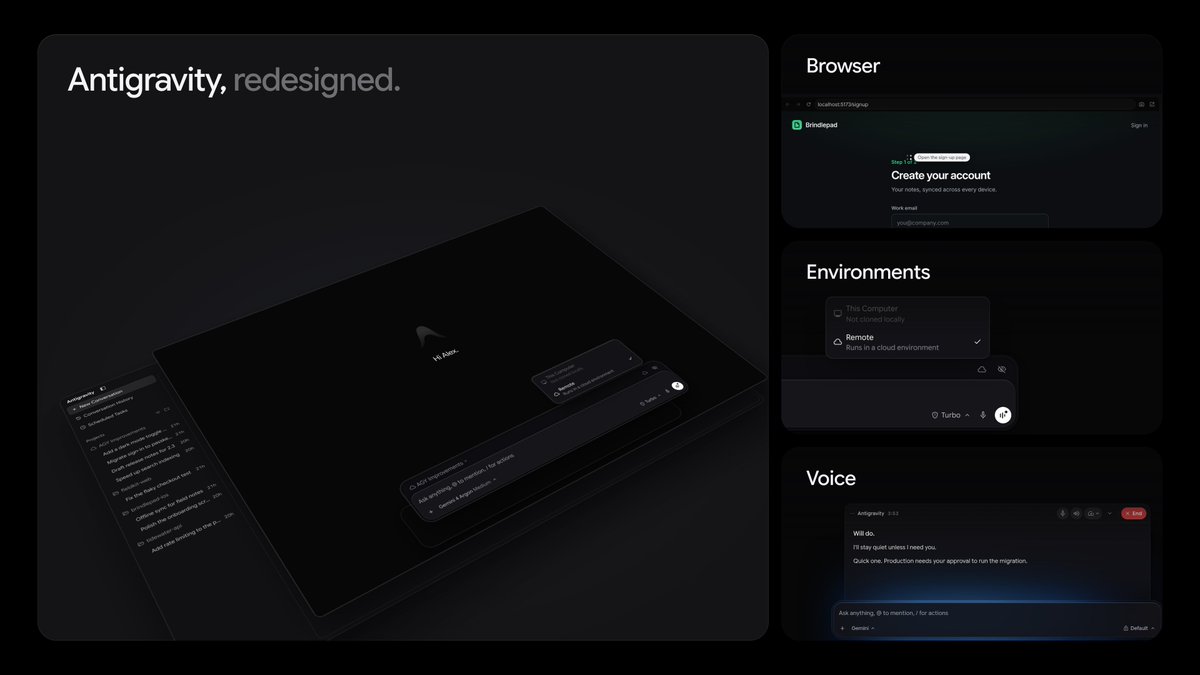
3. Antigravity: official UI redesign, more updates "in a couple hours"
Key points: @antigravity posts a new look-and-feel and asks for feedback; @_mohansolo says the app was redesigned to feel sleeker, with more coming in a couple of hours. This is an explicit client-surface iteration for Google's coding-agent stack (community briefs also mentioned Voice Mode / Remote Agents — treat those as secondary to the official redesign posts).
Why it matters: As model gaps narrow, shell feel drives daily use; showing a redesign on the public timeline signals Antigravity is competing as a productized IDE, not only a model wrapper.
- antigravity: new interface: https://x.com/antigravity/status/2118477081130512577
- _mohansolo: redesign + teaser: https://x.com/_mohansolo/status/2118478787566588009
4. T3 Code × Grok Bot goes mainstream; Antigravity recognizes t3-code
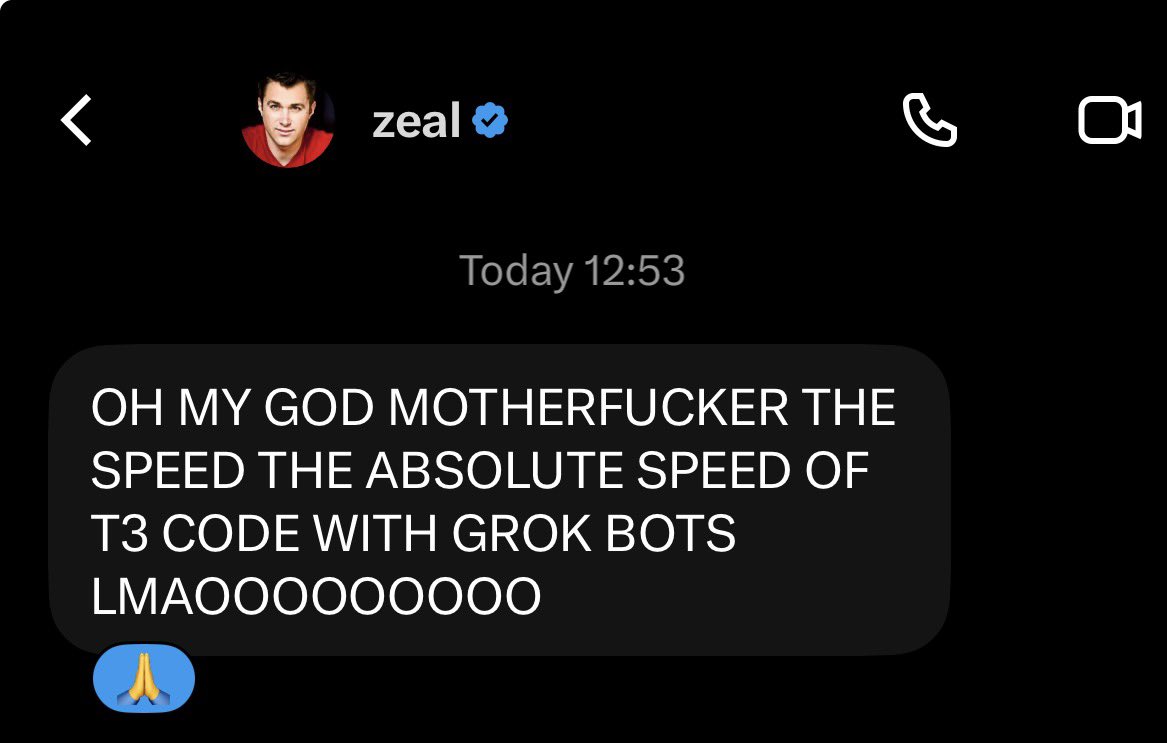
Key points: @theo says the T3 Code × Grok Bot combo is "breaking a lot of brains," with a screenshot of multi-agent control in one shell. The sharper engineering signal is @PatrickToulme: he landed t3-code as a recognized client in Antigravity's ACP server, so upcoming T3 releases will attribute traffic correctly (vs older workarounds that impersonated Zed). A PR to @t3dotcodes is mentioned.
Why it matters: A unified control plane only works if peers formally recognize the client — ACP allowlisting is closer to platformization than another promo thread.
- theo: T3 Code × Grok Bot: https://x.com/theo/status/2118472567128563862
- PatrickToulme: Antigravity recognizes t3-code: https://x.com/PatrickToulme/status/2118100376637321436
5. Vercel / rauchg: Bot + Cursor → deploy → X Money as one loop
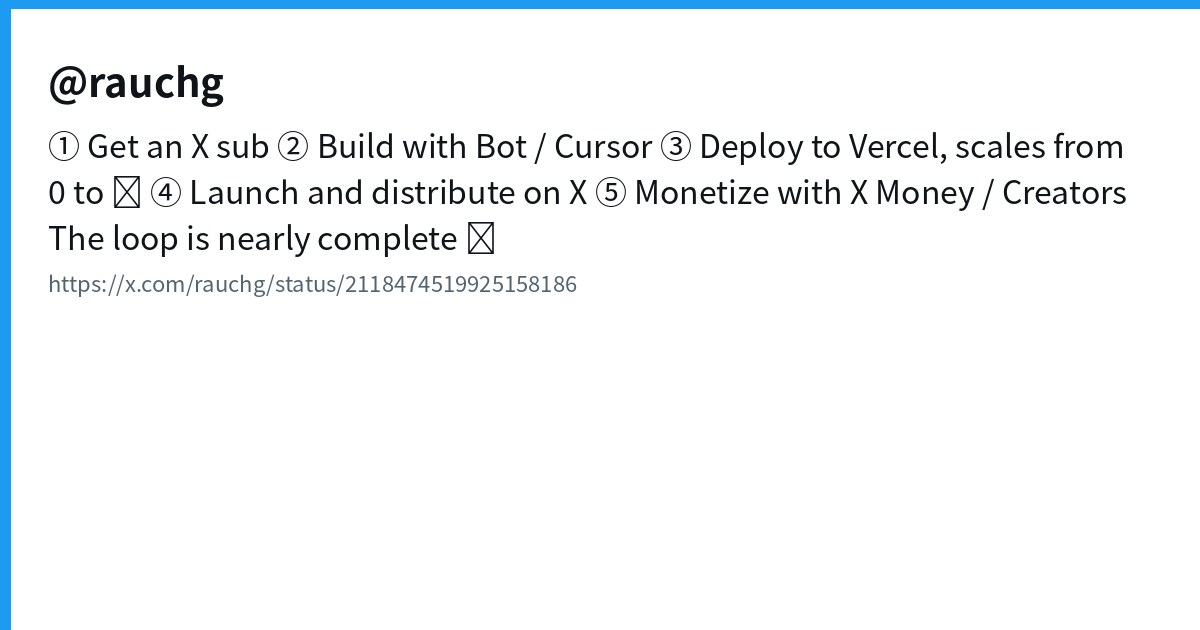
Key points: @rauchg sketches a five-step loop: X subscription → build with Bot / Cursor → deploy on Vercel → distribute on X → monetize with X Money / Creators, saying the loop is nearly complete. Same day: SpaceXSI 🤝 Vercel — Grok and Cursor can build, deploy, and scale. Social distribution, coding agents, and edge deploy are sold as one growth story.
Why it matters: This is less a feature drop than a bid to own the default path from idea to payout; indie builders may start picking tools by how few breaks they put in that ring.
- rauchg: Bot/Cursor → Vercel → X Money: https://x.com/rauchg/status/2118474519925158186
- rauchg: SpaceXSI × Vercel: https://x.com/rauchg/status/2118464177211940997
6. theo: agents get good at UI if you burn enough tokens
Key points: @theo posts a video: you can make agents good at UI if you burn enough tokens — and asks whether it helped other devs. Engagement is very high (500+ likes, 300+ bookmarks). The claim is about workflow and budget, not a new model: UI quality can be stacked via longer try–screenshot–fix loops.
Why it matters: It contradicts one-shot perfection marketing and surfaces the real cost of handing frontend to agents — useful signal when comparing Claude Code / Cursor / Codex.
- theo: agents good at UI: https://x.com/theo/status/2118465321032106235
7. pstack: Cursor's official Skills workflows expand to Codex / Claude Code / OpenCode
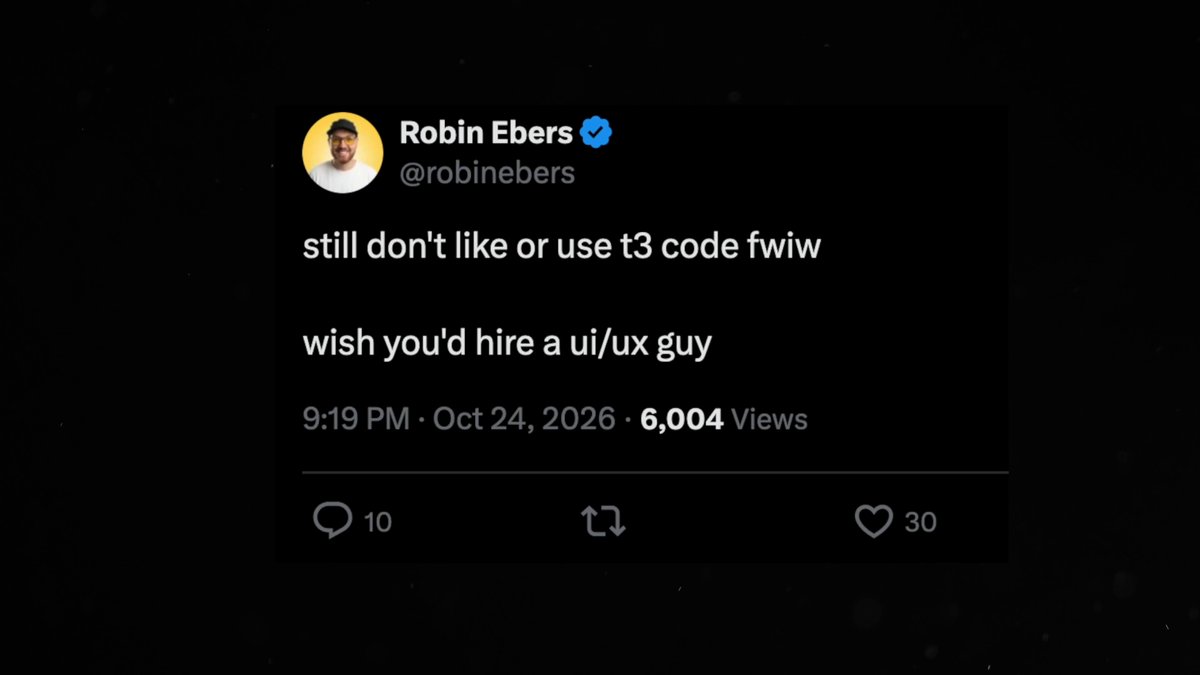
Key points: @xulijian1994 says fans of Cursor's official pstack Skills workflows can now use them with Codex, Claude Code, Gemini CLI, OpenCode, and more. pstack packages mature software-engineering practice into a standardized AI coding workflow so agents do more than emit code. Same-day community adaptations (e.g. new Codex-oriented pstack ports) read as playbook portability across hosts, not another completion model.
Why it matters: Once Skills/methodologies travel, moats move from "one IDE plugin" to reusable engineering scripts — which is why people running many CLIs still feel process-bound.
- xulijian1994: pstack cross-tool: https://x.com/xulijian1994/status/2118285896504275268
8. Uber ADR: detection & response for enterprise AI agents (repo not new)
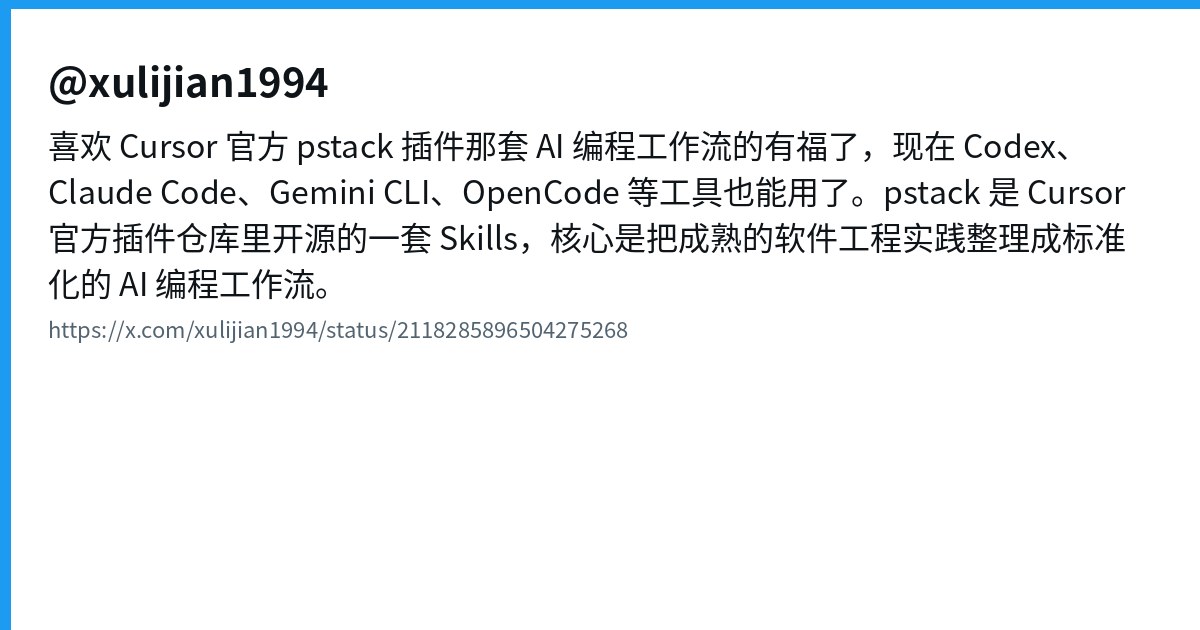
Key points: @thisguyknowsai amplifies Uber's open-source ADR (Agentic AI Detection and Response) — inventory which AI tools sit on employee laptops, reconstruct what an agent did, and test defenses beyond toy attacks. GitHub uber/ADR shows created_at ~2026-04-19 and 2k+ stars — today's wave is explanatory recirculation, not a fresh open-source drop.
Why it matters: While individuals polish harness UX, enterprises treat "which agents ran, and what did they do?" as a security product; observability will show up on procurement checklists for coding agents.
- thisguyknowsai: Uber ADR explainer: https://x.com/thisguyknowsai/status/2118281908698374374
9. Devin adds Kimi K3.1 Pro; FrontierCode 2.0 scores tick up
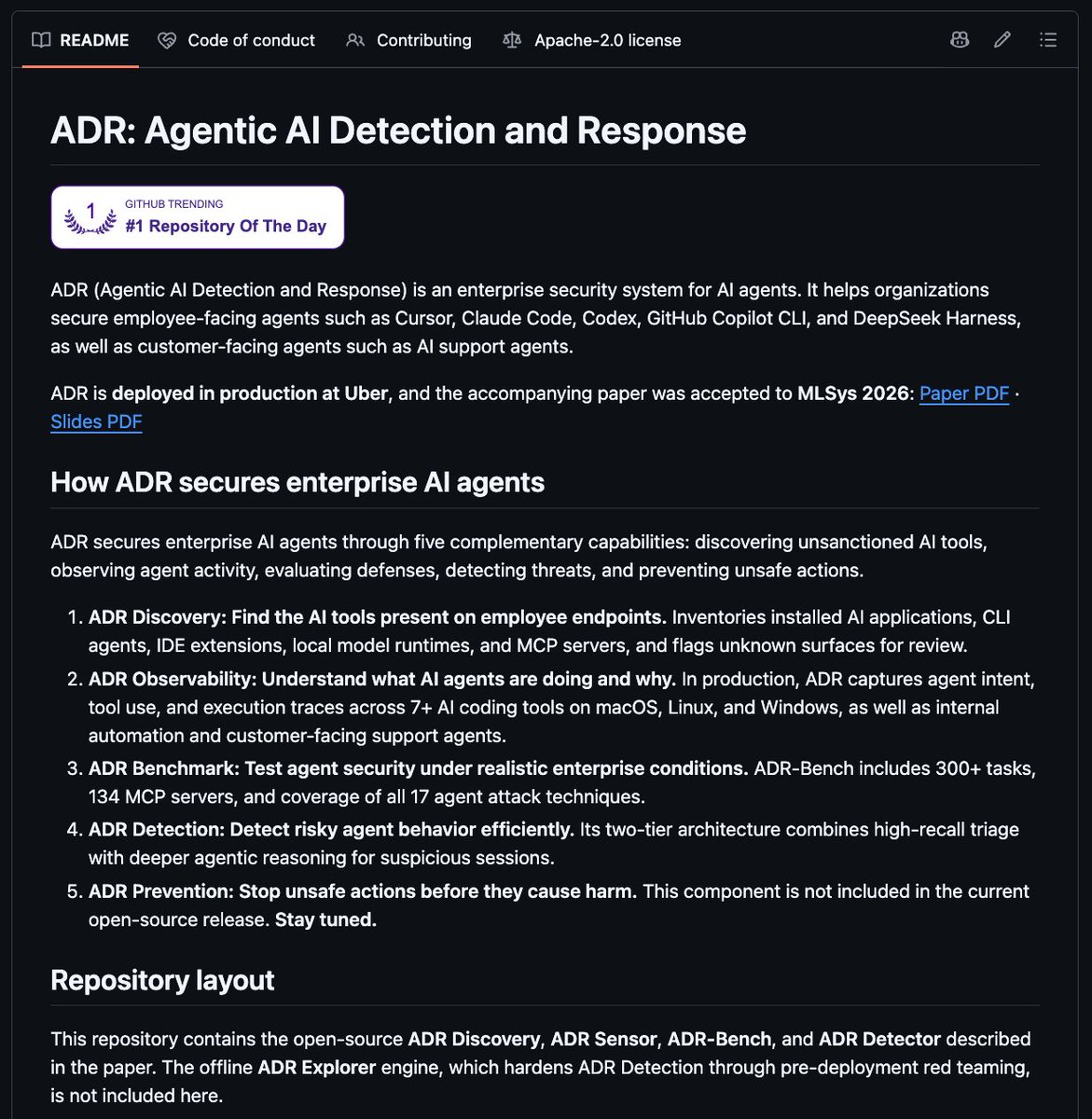
Key points: @devindevelopers announces Kimi K3.1 Pro in Devin Desktop and Devin CLI. On FrontierCode 2.0, max effort scores 19.6 (above Kimi K3's best 17.7); high effort lands at 17.3 (just under K3's 17.7). Same agent shell, stronger open-weight tier.
Why it matters: Devin keeps routing third-party frontier weights through its runtime — buyers compare shell + routing + eval protocol, not only one closed-model subscription.
- devindevelopers: Kimi K3.1 Pro on Devin: https://x.com/devindevelopers/status/2118470573474861410
10. Grok Bot quotas bite: community default is Bot plans, Claude Code builds, Codex reviews
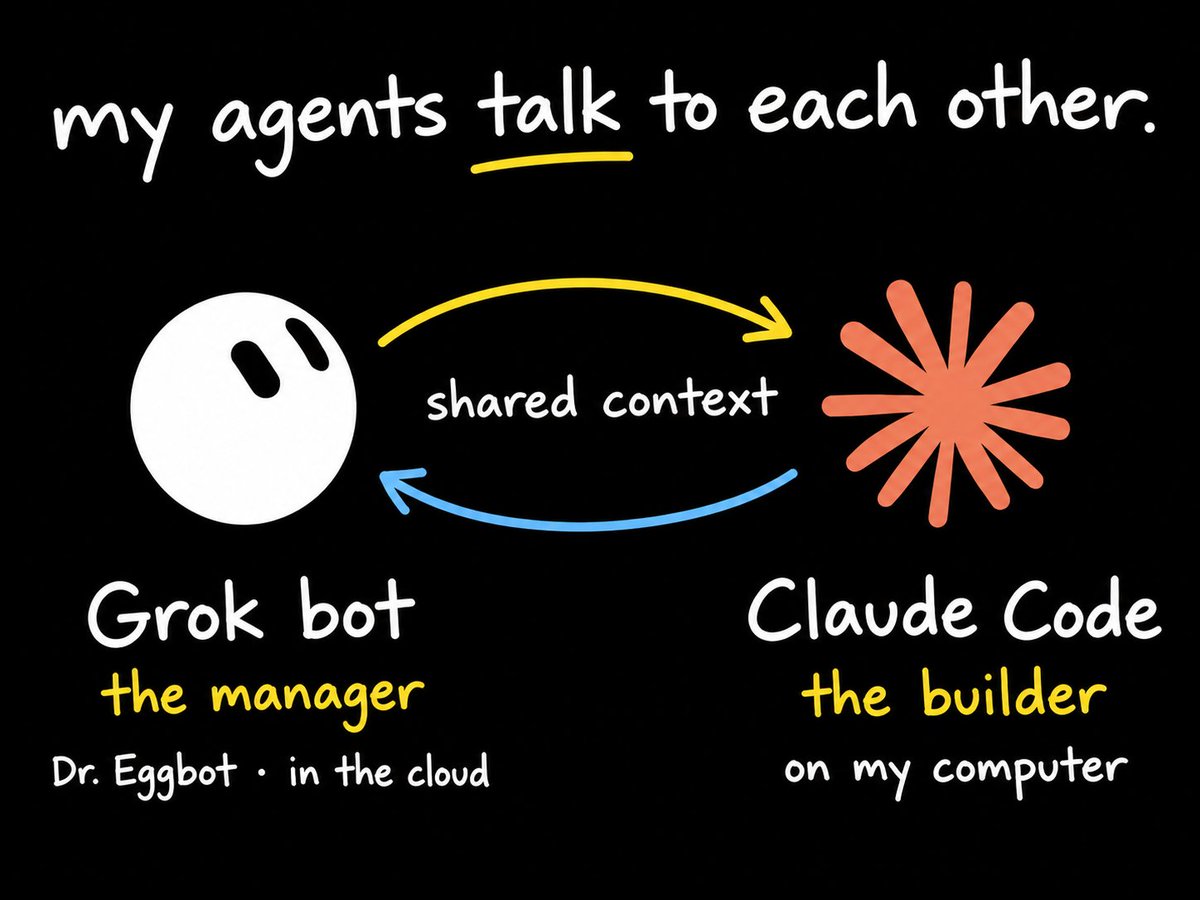
Key points: Threads cluster around Grok Bot cost/limits. @notbradyy recounts cycling through seven agents in six months and settling on Claude Code talking to Grok Bot; @kylon_ai and others push a split: Grok Bot plans → Claude Code builds → Codex reviews, each burning its own subscription. Japanese posts (e.g. @tetumemo) describe driving local Codex / Claude Code from Grok Bot for diagrams and short video. Quota pressure is forcing role-specialized multi-engine setups, not a single product launch.
Why it matters: When the "one do-everything Bot" hits a cost wall, the market grows an orchestration layer — the same demand behind Conductor's Meta deal and T3's unified shell.
- notbradyy: Claude Code × Grok Bot: https://x.com/notbradyy/status/2118062621152698507
- kylon_ai: three-role workspace: https://x.com/kylon_ai/status/2118010410120994903