AI Twitter Highlights · 2026-10-03
AI Twitter/X Highlights Digest · 2026-10-03 (Sat)
Key Takeaways
- GPT-6.1 Sol stabilizes: OpenAI announces a global usage reset for paid ChatGPT accounts and says speeds are back to expected after the early load spike; community chatter continues around FrontierMath-style scores.
- Claude Mods become demoable: the official You should Know plugin, a middleware walkthrough video, and multi Claude / Codex subscription workflows; alongside DeepSeek’s official desktop Harness push and Pi Durable landing in the Cloudflare Agents SDK.
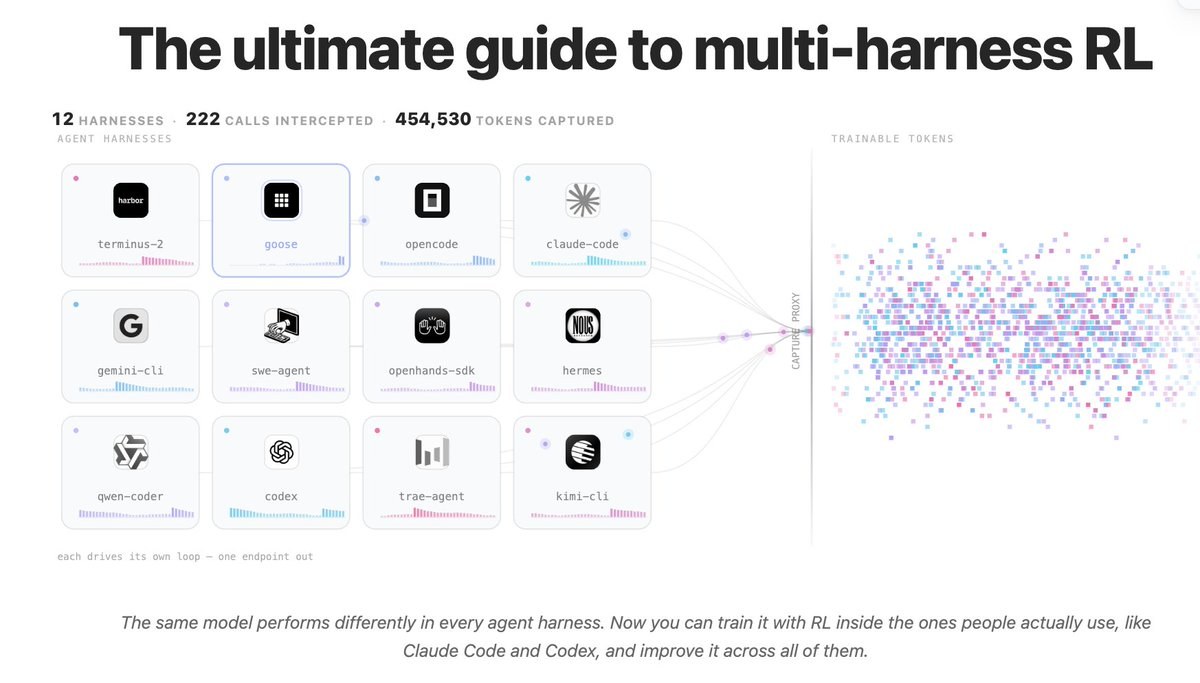
- Harness / product surface: Hugging Face multi-harness RL (same weights 62% vs 33%), T3 Code at 400k users with a Pi/MCP PR, newly open-sourced Muse Gadgets, Linear as a cloud coding workspace, the decision-model ecosystem, and Cline Desktop Connectors.
1. GPT-6.1 Sol: capacity recovery and a global reset
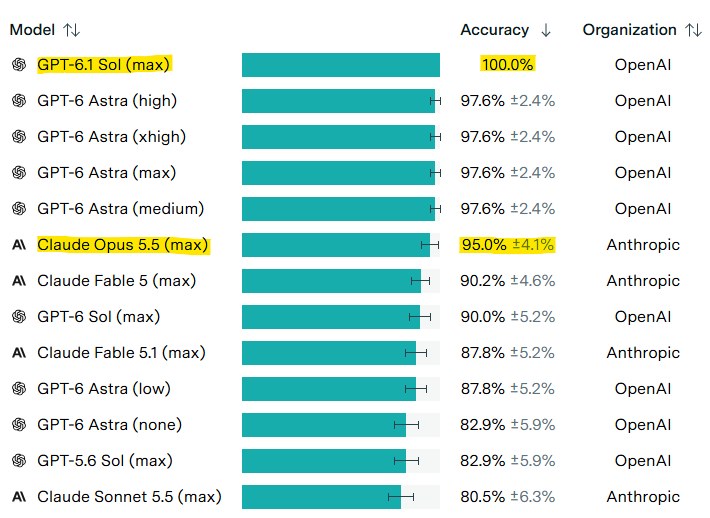
Takeaway: @thsottiaux says GPT-6.1 Sol is back to expected speeds after the first two days’ load spike, with a global usage reset for all paid ChatGPT accounts (around 10am PST the next day); a follow-up confirms “Reset all propagated.” @haider1 praises Sol’s restored base intelligence; other posts discuss FrontierMath Tier 4 saturation screenshots (community framing, not an official leaderboard claim).
Why it matters: After DevDay demand shocks, “can I actually use it” becomes the product story for ChatGPT / coding workflows.
- Capacity + reset: https://x.com/thsottiaux/status/2105843926221660585
- Reset propagated: https://x.com/thsottiaux/status/2106131810921136451
- FrontierMath chatter: https://x.com/haider1/status/2106129595959251214
2. Claude Mods: demos, an official plugin, and multi-sub workflows
Takeaway: @lydiahallie ships a Mods walkthrough: Mods are plugins with hooks that let your code run inside Claude Code like middleware (Claude can write them for you). @trq212 highlights the official You should Know plugin—scanning Claude’s output for easy-to-miss info, enabled via /plugin enable. @theo posts a long video on juggling 6 Claude + 3 Codex subscriptions. @ClaudeCodeLog notes Claude Code 2.1.288 (bash tool, delegated multi-step agents, and more CLI changes).
Why it matters: Mods move from announcement to walkthrough + first-party plugins; quota orchestration itself becomes a coding-agent product problem.
- Mods walkthrough: https://x.com/lydiahallie/status/2106127556491821499
- You should Know: https://x.com/trq212/status/2106119299484221762
- Multi-sub video: https://x.com/theo/status/2106119810509881791
- 2.1.288: https://x.com/ClaudeCodeLog/status/2106119715764531420

3. DeepSeek Harness: official account pushes desktop builds
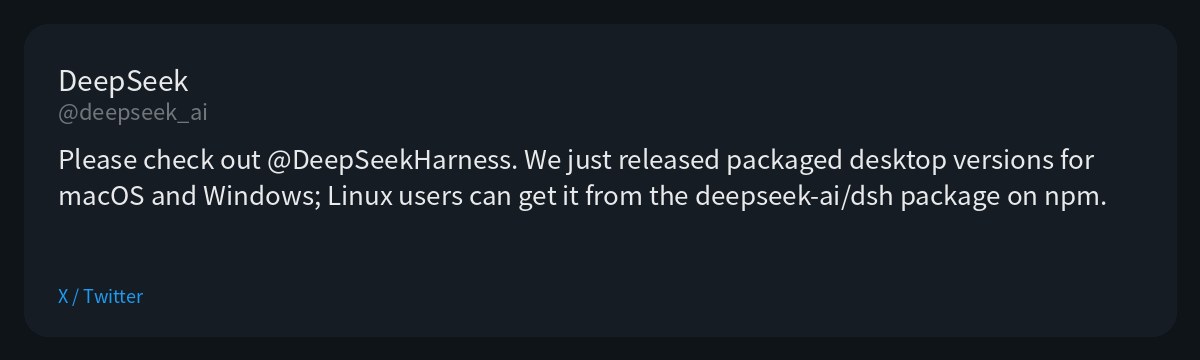
Takeaway: @deepseek_ai boosts @DeepSeekHarness, announcing packaged macOS / Windows desktop builds, with Linux via the deepseek-ai/dsh npm package. The GitHub repo deepseek-ai/deepseek-harness was created in 2026-08—today’s story is official distribution, not a brand-new open-source drop. Chinese community posts keep comparing Pi / DSH / Codex on FrontierHarness-style tasks (unofficial self-tests).
Why it matters: Open harnesses that ship an official account + desktop installer compete on trust and install UX, not only CLI purity.
- deepseek_ai: https://x.com/deepseek_ai/status/2105915715241062644
- Pi vs DSH community test: https://x.com/fankaishuoai/status/2105912535925010761
4. Pi Durable × Cloudflare Agents SDK
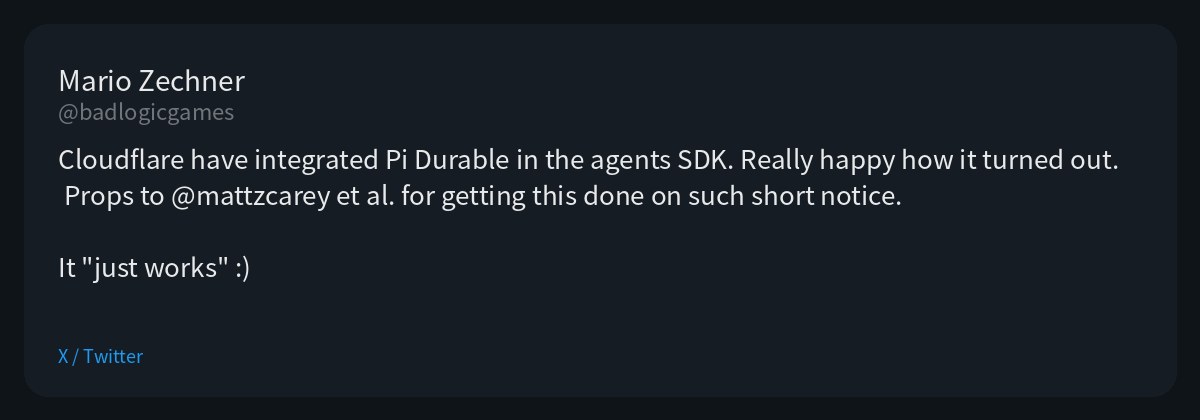
Takeaway: @badlogicgames says Cloudflare integrated Pi Durable into the Agents SDK—“just works”—with shout-outs to @mattzcarey et al. Code-mode token savings for long-running tasks stay a theme; @fankaishuoai’s FrontierHarness subset claims that with GPT-6.1 Sol, Pi matches Codex completion rate while using ~62% fewer tokens and running ~23% faster (community self-test). There’s also playful talk of forking OpenClaw onto Pi Durable.
Why it matters: Pi expands from a minimal CLI agent into a cloud Durable runtime wired into Cloudflare’s developer stack.
- Cloudflare integration: https://x.com/badlogicgames/status/2106093146296008857
- Pi vs Codex tokens: https://x.com/fankaishuoai/status/2105911292980793500
- Code mode reading: https://x.com/badlogicgames/status/2105957444287430989
5. Hugging Face: same weights, 62% vs 33% across harnesses
Takeaway: @huggingface notes the same model and weights can score 62% in one agent harness and 33% in another. Their multi-harness RL guide avoids editing Claude Code / Codex / OpenCode: a proxy speaks four API dialects, captures sampled token ids / logprobs, and you train on that. Reported results include LiquidAI LFM2.5-2.6B rising 42%→54% when trained across four harnesses; OpenCode-only training can jump 34%→58%, but multi-harness transfers better. Pure SFT on a larger model’s successful rollouts plateaued ~47.5%. Proxy, trainer, tasks, and seven trained models are open.
Why it matters: “Switching harnesses is like switching worlds” becomes a trainable objective—same arc as Mods / Durable / DSH extensibility.
- HF post: https://x.com/huggingface/status/2106034221005312448
- Custom-harness essay: https://x.com/omarsar0/status/2106029828302373354
6. T3 Code: 400k users and a Pi / MCP / delegation PR
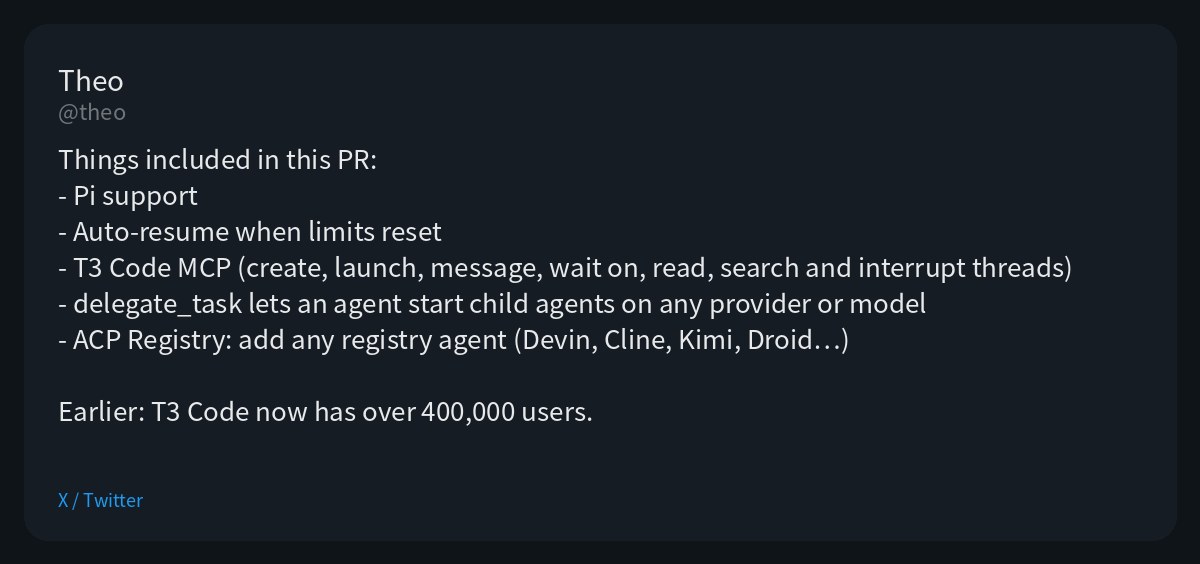
Takeaway: @theo says T3 Code has passed 400,000 users and teases a Nightly overhaul. A follow-up PR list includes Pi support, auto-resume after limit resets, a T3 Code MCP (create / launch / message / wait / read / search / interrupt threads), delegate_task for child agents on any provider/model, and an ACP Registry (Devin / Cline / Kimi / Droid, etc.). UX betas like “Hide threads while working” also shipped.
Why it matters: An independent coding UI is scaling users while making multi-harness / multi-agent orchestration a first-class feature.
- 400k users: https://x.com/theo/status/2105921113603952853
- Pi / MCP PR: https://x.com/theo/status/2106123856759120317
- Nightly heads-up: https://x.com/theo/status/2106106626377977889
7. Muse Gadgets: ESP32 / Linux SDK open-sourced today
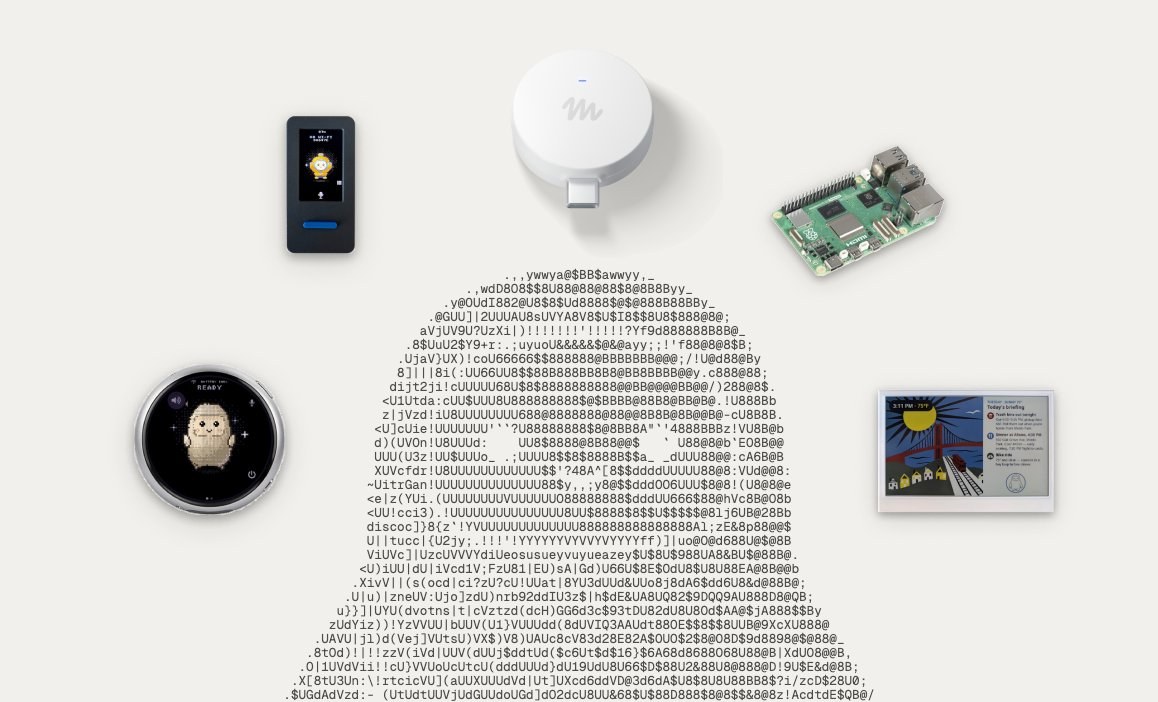
Takeaway: @natfriedman and @alexandr_wang announce Muse Gadgets—open-source ESP32 firmware and a Linux SDK so builders (and coding agents pointed at the repo) can make Muse peripherals—plus first-party gear like Muse Home Link. GitHub facebookincubator/muse-gadget-sdk was created 2026-10-02 (Apache-2.0), so this is genuinely new OSS in-window; community ports/forks already appeared. The pitch explicitly says to hand an API token to your favorite coding agent.
Why it matters: A hardware SDK treats coding agents as the default build loop—agents move from editing software to editing gadgets on your desk.
- Nat: https://x.com/natfriedman/status/2106099383037309211
- Alexandr: https://x.com/alexandr_wang/status/2106113742266089526
- Why open-source: https://x.com/alexandr_wang/status/2106116686654931161
8. Linear: a cloud coding workspace inside the product tracker
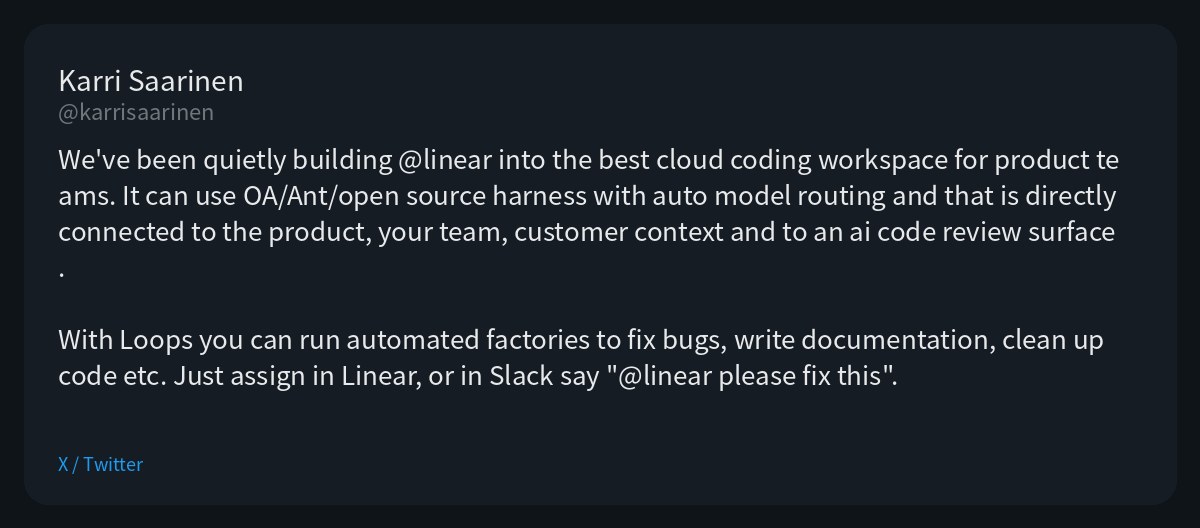
Takeaway: @karrisaarinen positions Linear as a cloud coding workspace for product teams: OpenAI / Anthropic / open-source harnesses with auto model routing, wired into product, team, and customer context plus an AI code-review surface. Loops run scheduled or triggered factories (bugfixes, docs, cleanup); assign in Linear or say @linear please fix this in Slack. No separate platform fee or token markup—published API rates + sandbox minutes (ChatGPT sign-in coming).
Why it matters: The issue tracker absorbs first-class coding-agent sessions and competes with “buy another AI engineer platform.”
- Cloud coding workspace: https://x.com/karrisaarinen/status/2106041873106371025
- Loops: https://x.com/karrisaarinen/status/2105818323162472903
9. Decision models: Perplexity’s decider and the Jev ecosystem
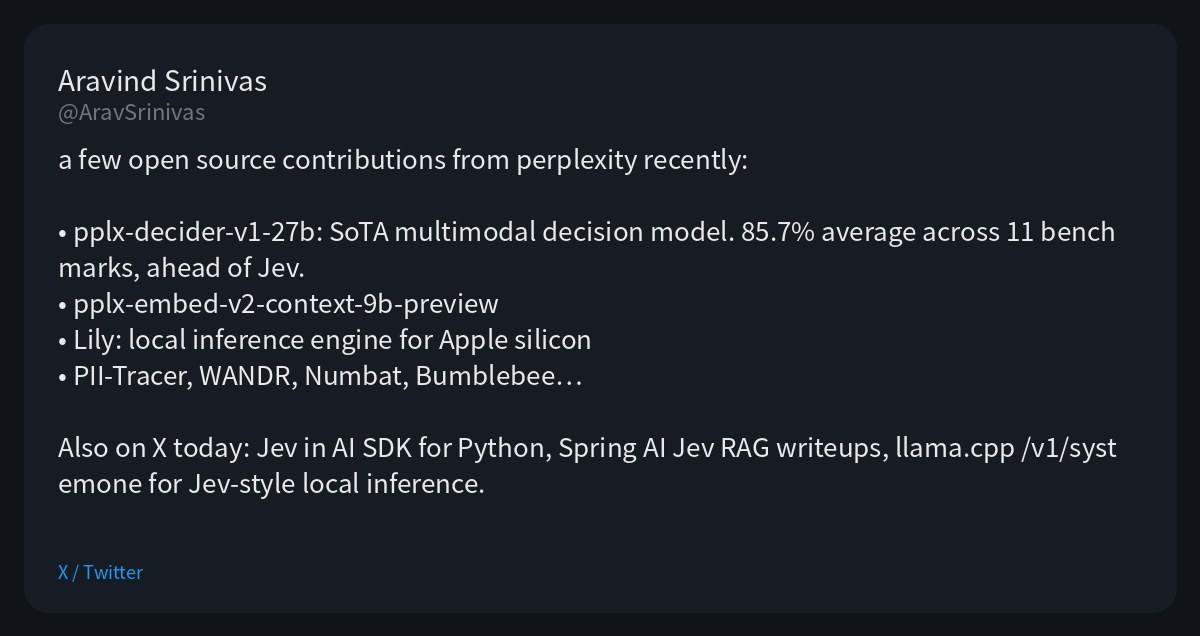
Takeaway: @AravSrinivas lists recent Perplexity OSS, led by multimodal pplx-decider-v1-27b (claimed 85.7% avg across 11 benches, ahead of Jev), plus contextual embeddings, Apple-silicon engine Lily, on-device PII classification, and more. @hwchase17 frames decision models as cheap typed answers for harness micro-calls (routing / approvals / judging). Same day: @rauchg / @vercel on Jev in the AI SDK for Python, @mitsuhiko asking for Jev + codemode demos, Spring AI Jev RAG writeups, and @huggingface noting llama.cpp’s /v1/systemone for local Jev-style inference.
Why it matters: Decision models are becoming a full stack (SDK / RAG / local runtime) specialized for short harness decisions.
- Perplexity OSS: https://x.com/AravSrinivas/status/2106119404433908149
- LangChain take: https://x.com/hwchase17/status/2105806366405484628
- Jev × Python: https://x.com/rauchg/status/2106139305131569178
- Jev + codemode: https://x.com/mitsuhiko/status/2106092733957906474
10. Cline Desktop: Connectors (beta) for mail and work apps
Takeaway: @cline launches Cline Desktop Connectors (beta)—one-click links to Gmail, Slack, Google Calendar, Linear, Sentry, Notion, and more so Cline can pull context and act (e.g. overnight email/Slack brief with approved replies). Works with ClinePass and free models such as DeepSeek-V4.1-Flash; start under Customize → Connectors.
Why it matters: Desktop coding agents expand from “edit the repo” to “read your inbox and issues,” competing for the same workflow surface as Linear Loops and Claude Mods.
- Connectors announcement: https://x.com/cline/status/2106088611116675213